Synonyms for gloomy are words that have a similar meaning to the word gloomy. These words describe sadness, darkness, low spirits, or a lack of hope. Learning synonyms for gloomy helps people express feelings and situations in many ways. Synonyms for gloomy are useful in writing, speaking, and everyday English because they add variety and make sentences more interesting.
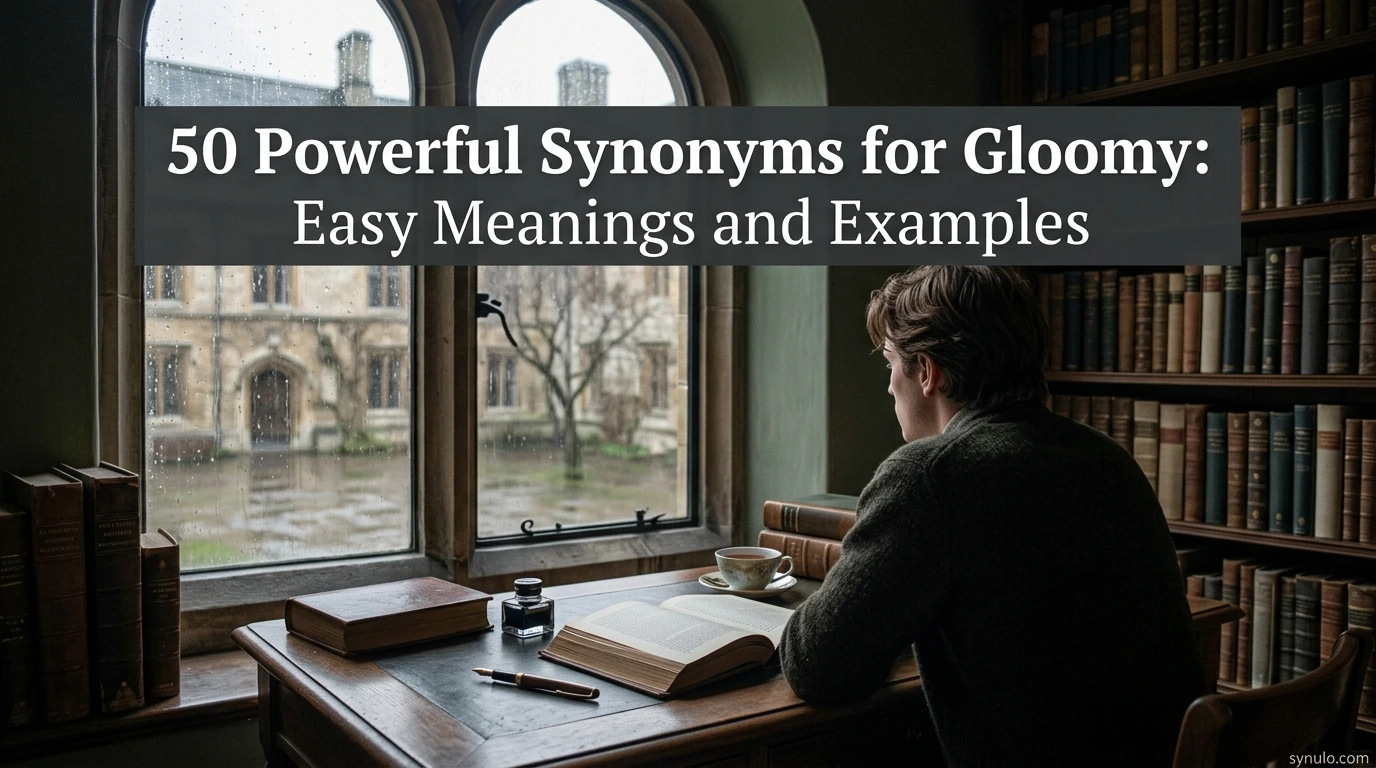
Picture a rainy afternoon when the sky is dark and everyone feels quiet. A student sits by the window trying to finish homework while feeling a little sad. Instead of using the same word again and again, different words can make thoughts clearer and richer. That is why learning these words matters.
A simple example is this: “The weather looked gloomy before the storm arrived.” Here, gloomy means dark, sad, or lacking happiness.
These words are useful for:
- Students who want better essays.
- Bloggers who want interesting content.
- Content writers who need rich vocabulary.
- Daily English users who want natural conversations.
“Words give color to thoughts.”
“A rich vocabulary makes simple ideas shine.”
Comparison Table
| Keyword | Meaning | Usage Type | Context |
| None | No additional keywords provided | General | Daily use |
Synonyms for Gloomy
1. Sad
Meaning:
Sad means feeling unhappy.
Examples:
I felt sad after the movie ended.
She looked sad during class.
2. Depressed
Meaning:
Depressed means feeling very low and unhappy.
Examples:
He seemed depressed after losing the game.
The news made her feel depressed.
3. Miserable
Meaning:
Miserable means feeling very unhappy.
Examples:
Tom felt miserable in the cold rain.
I was miserable without my phone.
4. Unhappy
Meaning:
Unhappy means not feeling happy.
Examples:
She looked unhappy at dinner.
The child became unhappy quickly.
5. Downcast
Meaning:
Downcast means feeling sad and discouraged.
Examples:
He looked downcast after the test.
Her face seemed downcast.
6. Melancholy
Meaning:
Melancholy means gently sad.
Examples:
The song gave me a melancholy feeling.
She had a melancholy smile.
7. Somber
Meaning:
Somber means serious and sad.
Examples:
The room became somber after the news.
His voice sounded somber.
8. Dreary
Meaning:
Dreary means dull and sad.
Examples:
The day felt dreary and cold.
The empty street looked dreary.
9. Dark
Meaning:
Dark means lacking light or hope.
Examples:
The sky turned dark.
His mood became dark.
10. Bleak
Meaning:
Bleak means showing little hope.
Examples:
The future looked bleak.
The town felt bleak in winter.
11. Cheerless

Meaning:
Cheerless means without joy.
Examples:
The room looked cheerless.
His face seemed cheerless.
12. Dismal
Meaning:
Dismal means very gloomy and depressing.
Examples:
The weather was dismal.
She gave a dismal report.
13. Hopeless
Meaning:
Hopeless means without hope.
Examples:
He felt hopeless after the loss.
The situation looked hopeless.
14. Mournful
Meaning:
Mournful means showing sadness.
Examples:
The music sounded mournful.
Her voice was mournful.
15. Glum
Meaning:
Glum means quiet and unhappy.
Examples:
He looked glum all day.
Jenny felt glum after school.
16. Blue
Meaning:
Blue means feeling sad.
Examples:
I felt blue this morning.
She seemed blue after work.
17. Gray
Meaning:
Gray means dull and lifeless.
Examples:
The day looked gray.
His mood felt gray.
18. Joyless
Meaning:
Joyless means lacking happiness.
Examples:
The party became joyless.
Her voice sounded joyless.
19. Pessimistic
Meaning:
Pessimistic means expecting bad things.
Examples:
He was pessimistic about the game.
She sounded pessimistic.
20. Sorrowful
Meaning:
Sorrowful means full of sadness.
Examples:
The story felt sorrowful.
His eyes looked sorrowful.
21. Despairing
Meaning:
Despairing means feeling no hope.
Examples:
She sounded despairing.
His message seemed despairing.
22. Morose
Meaning:
Morose means quietly unhappy.
Examples:
He became morose after work.
Her mood was morose.
23. Weary
Meaning:
Weary means tired and low.
Examples:
I felt weary after the trip.
She looked weary today.
24. Heavyhearted
Meaning:
Heavyhearted means deeply sad.
Examples:
He felt heavyhearted after leaving.
She looked heavyhearted.
25. Dejected
Meaning:
Dejected means disappointed and sad.
Examples:
Tom felt dejected after losing.
She looked dejected.
“Good writers choose the right word for every feeling.”
26. Crestfallen
Meaning:
Crestfallen means disappointed and sad.
Examples:
He felt crestfallen after the exam.
She looked crestfallen at lunch.
27. Low
Meaning:
Low means feeling unhappy.
Examples:
I felt low yesterday.
She seemed low after work.
28. Sullen
Meaning:
Sullen means silent and unhappy.
Examples:
He sat with a sullen face.
The boy became sullen.
29. Doleful
Meaning:
Doleful means very sad.
Examples:
Her voice sounded doleful.
The music felt doleful.
30. Tragic
Meaning:
Tragic means very sad and serious.
Examples:
The story was tragic.
Everyone heard the tragic news.
31. Grave
Meaning:
Grave means serious and sad.
Examples:
His face looked grave.
She gave a grave answer.
32. Lonely
Meaning:
Lonely means feeling alone.
Examples:
I felt lonely at home.
He seemed lonely today.
33. Woeful
Meaning:
Woeful means very unhappy.
Examples:
The child looked woeful.
Her voice sounded woeful.
34. Heartbroken

Meaning:
Heartbroken means deeply sad.
Examples:
She was heartbroken after moving away.
He felt heartbroken.
35. Distressed
Meaning:
Distressed means upset and worried.
Examples:
She felt distressed by the news.
His face looked distressed.
36. Disheartened
Meaning:
Disheartened means losing hope.
Examples:
He became disheartened.
She felt disheartened after practice.
37. Desolate
Meaning:
Desolate means empty and sad.
Examples:
The town looked desolate.
He felt desolate after the move.
38. Murky
Meaning:
Murky means dark and gloomy.
Examples:
The sky looked murky.
The room felt murky.
39. Cloudy
Meaning:
Cloudy means dull and dark.
Examples:
The weather stayed cloudy.
His mood became cloudy.
40. Shadowy
Meaning:
Shadowy means dark and unclear.
Examples:
The street looked shadowy.
The hall felt shadowy.
41. Brooding
Meaning:
Brooding means deeply thoughtful and sad.
Examples:
He had a brooding look.
She sat with a brooding face.
42. Dim
Meaning:
Dim means lacking brightness.
Examples:
The room was dim.
The evening became dim.
43. Funereal
Meaning:
Funereal means very serious and sad.
Examples:
His voice sounded funereal.
The room felt funereal.
44. Dull
Meaning:
Dull means lacking excitement.
Examples:
The day seemed dull.
Her mood became dull.
45. Lifeless
Meaning:
Lifeless means lacking energy.
Examples:
The place looked lifeless.
His eyes seemed lifeless.
46. Discouraged

Meaning:
Discouraged means losing confidence.
Examples:
She felt discouraged after practice.
He looked discouraged.
47. Despondent
Meaning:
Despondent means feeling hopeless.
Examples:
He felt despondent yesterday.
She looked despondent after work.
48. Gritty
Meaning:
Gritty means rough and dark.
Examples:
The movie had a gritty feel.
The street looked gritty.
49. Oppressive
Meaning:
Oppressive means heavy and uncomfortable.
Examples:
The heat felt oppressive.
The room had an oppressive mood.
50. Forlorn
Meaning:
Forlorn means lonely and sad.
Examples:
The puppy looked forlorn.
He seemed forlorn after saying goodbye.
Conclusion
Learning synonyms for gloomy can make writing stronger and speech more natural. Using different words helps students create better essays and helps bloggers produce engaging content. Writers can avoid repeating the same words and make stories more interesting. Good vocabulary also improves communication with friends, teachers, and coworkers.
These words are useful in many places. You can use them in emails, school essays, articles, social media posts, and daily conversations. Small changes in word choice can make your message clearer and more powerful.
Practice one or two new words every day. Try using them when talking with friends or writing short paragraphs. Over time, your English will become richer and easier to understand.

Ethan Brooks is a content creator at Synulo.com who shares practical insights on technology, productivity tools, and the latest digital trends.