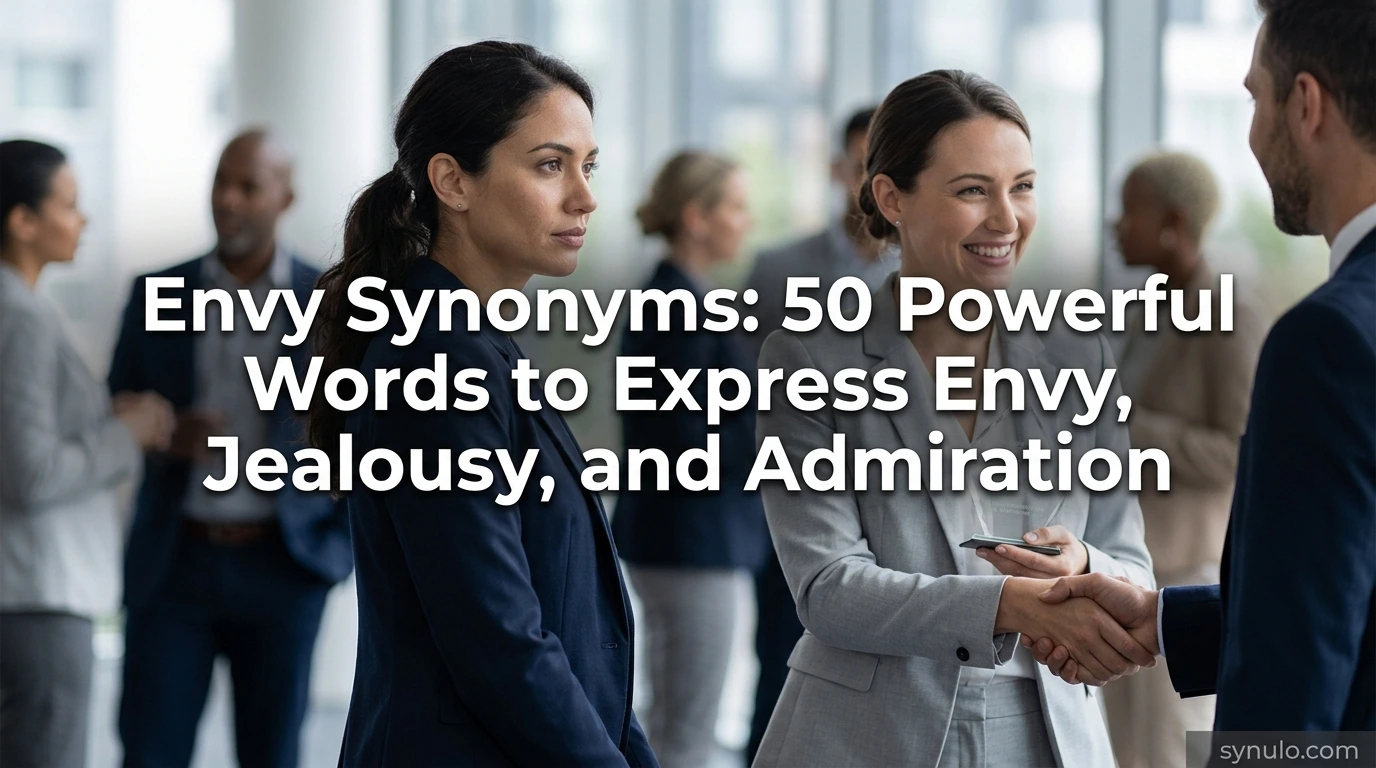
Envy synonyms are words that have the same or a similar meaning as envy. Envy synonyms help you express feelings of wanting something another person has, such as success, talent, money, or happiness. Learning envy synonyms makes your English richer, clearer, and more natural. Instead of using the same word again and again, you can choose a better word for each situation.
Imagine two friends working in the same office. One gets a promotion after months of hard work. The other feels a little sad because they wanted that success too. That feeling is often called envy, but English offers many other words that can describe it in different ways. Knowing these words helps you speak and write with more confidence.
A student can use these words to improve essays. A blogger can make articles more interesting. A content writer can avoid repeating the same word. Even in daily conversations, these words help explain feelings more clearly and naturally.
Learning envy synonyms is not just about growing your vocabulary. It is about choosing the right word for the right moment. Some words sound stronger, while others are softer or more formal. Understanding these small differences will make your English sound more fluent and professional.
“A rich vocabulary gives power to every sentence.”
“The right word can express a feeling more clearly than many sentences.”
Comparison Table
| Keyword | Meaning | Usage Type | Context |
| No other keywords provided | No additional keyword was supplied for comparison. | — | — |
1. Jealousy
Meaning:
Jealousy is the feeling of wanting what someone else has.
Examples:
- She felt jealousy when her friend won the prize.
- His jealousy made him upset for a while.
2. Covet
Meaning:
Covet means to strongly want something that belongs to another person.
Examples:
- Many people covet a beautiful house.
- He coveted his neighbor’s new car.
3. Resentment
Meaning:
Resentment is a bitter feeling because someone else has something you want.
Examples:
- She hid her resentment behind a smile.
- His resentment grew after the promotion.
4. Longing
Meaning:
Longing means a strong wish to have something.
Examples:
- She looked at the trophy with longing.
- He felt a deep longing for success.
5. Desire
Meaning:
Desire means wanting something very much.
Examples:
- Her desire to succeed inspired everyone.
- He had a strong desire for a better life.
6. Craving
Meaning:
Craving means a very strong wish for something.
Examples:
- She had a craving for recognition.
- His craving for success never stopped.
“Words shape our thoughts, and better words create better communication.”
7. Yearning
Meaning:
Yearning means a deep and lasting wish for something.
Examples:
- She felt a yearning to travel the world.
- His yearning for knowledge kept him reading.
8. Greed
Meaning:
Greed means wanting more than you need.
Examples:
- Greed can hurt friendships.
- His greed made people avoid him.
9. Lust
Meaning:
Lust means a very strong desire for something.
Examples:
- His lust for power changed him.
- She ignored her lust for fame.
10. Admiration
Meaning:
Admiration means respect and liking for someone, sometimes mixed with a wish to be like them.
Examples:
- She spoke with admiration about her teacher.
- His admiration inspired him to work harder.
11. Enviousness
Meaning:
Enviousness is the feeling of being unhappy because someone else has something you want.
Examples:
- Her enviousness showed when she saw the award.
- He tried to hide his enviousness during the meeting.
12. Covetousness

Meaning:
Covetousness means a strong desire to own what belongs to someone else.
Examples:
- His covetousness caused many problems.
- She avoided acting with covetousness.
13. Rivalry
Meaning:
Rivalry is a feeling of competition between people who want the same success.
Examples:
- Their rivalry pushed them to improve.
- Friendly rivalry made the game exciting.
14. Discontent
Meaning:
Discontent means being unhappy because you want something better.
Examples:
- Her discontent grew after the results.
- He felt discontent with his current job.
15. Dissatisfaction
Meaning:
Dissatisfaction means not being pleased with what you have.
Examples:
- His dissatisfaction was easy to notice.
- She shared her dissatisfaction with the project.
16. Aspiration
Meaning:
Aspiration means a strong hope to achieve something.
Examples:
- Her aspiration was to become a doctor.
- His aspiration helped him stay focused.
17. Ambition
Meaning:
Ambition means a strong wish to succeed.
Examples:
- Her ambition impressed everyone.
- His ambition led him to work late every day.
18. Wish
Meaning:
Wish means a simple desire for something.
Examples:
- She made a wish for good luck.
- His wish finally came true.
19. Hope
Meaning:
Hope means believing that something good can happen.
Examples:
- She held on to hope every day.
- His hope gave him confidence.
20. Want
Meaning:
Want means to desire or need something.
Examples:
- I want to improve my English.
- They want a better future.
21. Desirefulness
Meaning:
Desirefulness means having a strong feeling of wanting something.
Examples:
- Her desirefulness was easy to see.
- His desirefulness helped him set clear goals.
22. Avidity
Meaning:
Avidity means a strong eagerness to gain or achieve something.
Examples:
- She studied with avidity every evening.
- His avidity for learning impressed the teacher.
23. Eagerness
Meaning:
Eagerness means being excited and ready for something.
Examples:
- The children showed eagerness to learn.
- Her eagerness made the team smile.
24. Hunger
Meaning:
Hunger can mean a strong desire to achieve something.
Examples:
- His hunger for success never faded.
- She had a hunger to learn new skills.
25. Thirst
Meaning:
Thirst means a strong wish for success, knowledge, or power.
Examples:
- His thirst for knowledge inspired others.
- She had a thirst to explore new places.
26. Zeal

Meaning:
Zeal means great energy and excitement for a goal.
Examples:
- She worked with zeal every day.
- His zeal encouraged the whole team.
27. Passion
Meaning:
Passion means a very strong love or desire for something.
Examples:
- Her passion for writing was inspiring.
- He followed his passion with confidence.
“The more words you know, the more clearly you can share your thoughts.”
28. Drive
Meaning:
Drive means strong determination to reach a goal.
Examples:
- Her drive helped her finish the project.
- His drive led him to success.
29. Motivation
Meaning:
Motivation means the reason or desire to do something.
Examples:
- Good teachers build motivation in students.
- His motivation stayed strong all year.
30. Competitiveness
Meaning:
Competitiveness means the desire to do better than others.
Examples:
- Healthy competitiveness can improve skills.
- Her competitiveness helped the team win.
31. Rivalrousness
Meaning:
Rivalrousness means a strong tendency to compete with others.
Examples:
- His rivalrousness made every match exciting.
- Her rivalrousness pushed her to improve every day.
32. Coveting
Meaning:
Coveting means strongly wanting something that belongs to another person.
Examples:
- Coveting another person’s success will not help you grow.
- She stopped coveting her friend’s new phone.
33. Green-Eyed Monster
Meaning:
Green-eyed monster is an idiom that means envy or jealousy.
Examples:
- The green-eyed monster appeared when he saw the award.
- Do not let the green-eyed monster control your choices.
34. Bitterness
Meaning:
Bitterness is a lasting feeling of anger or envy.
Examples:
- Her bitterness slowly disappeared.
- He spoke without bitterness after the loss.
35. Regret
Meaning:
Regret means feeling sad about something you did not have or do.
Examples:
- She felt regret after missing the chance.
- His regret encouraged him to try again.
36. Frustration
Meaning:
Frustration means feeling upset because you cannot get what you want.
Examples:
- His frustration showed during the game.
- She managed her frustration calmly.
37. Insecurity
Meaning:
Insecurity means lacking confidence in yourself.
Examples:
- Her insecurity made her compare herself to others.
- He worked hard to overcome his insecurity.
38. Comparison
Meaning:
Comparison means looking at how you are different from someone else.
Examples:
- Constant comparison can reduce happiness.
- She avoided comparison and focused on her goals.
39. Displeasure
Meaning:
Displeasure means feeling unhappy or annoyed.
Examples:
- His displeasure was clear from his face.
- She expressed her displeasure politely.
40. Malice

Meaning:
Malice means the desire to hurt someone because of anger or envy.
Examples:
- She spoke without malice.
- His malice damaged the friendship.
41. Ill Will
Meaning:
Ill will means unfriendly feelings toward someone, often caused by envy or anger.
Examples:
- There was no ill will between the two friends.
- His ill will disappeared after they talked.
42. Spite
Meaning:
Spite means a desire to upset or hurt someone because of anger or envy.
Examples:
- She refused to act out of spite.
- He made the comment in spite.
43. Grudging
Meaning:
Grudging means showing unwilling respect or praise because of envy.
Examples:
- She gave him grudging praise.
- His grudging smile surprised everyone.
44. Resentfulness
Meaning:
Resentfulness means a lasting feeling of anger because someone has an advantage.
Examples:
- Her resentfulness slowly faded away.
- He spoke without resentfulness.
45. Covetable Feeling
Meaning:
Covetable feeling means the desire to own something attractive that belongs to someone else.
Examples:
- The new car created a covetable feeling among neighbors.
- She ignored the covetable feeling and stayed thankful.
46. Desire to Possess
Meaning:
Desire to possess means wanting to own something that another person has.
Examples:
- His desire to possess the watch grew stronger.
- She controlled her desire to possess expensive things.
47. Competitive Spirit
Meaning:
Competitive spirit means the strong wish to perform better than others.
Examples:
- Her competitive spirit helped her improve.
- The team admired his competitive spirit.
48. Self-Comparison
Meaning:
Self-comparison means judging yourself against other people.
Examples:
- Too much self-comparison can lower confidence.
- She reduced self-comparison by focusing on her goals.
49. Discontentment
Meaning:
Discontentment means the feeling of not being satisfied with what you have.
Examples:
- His discontentment motivated him to work harder.
- She overcame her discontentment with gratitude.
50. Yearning Desire
Meaning:
Yearning desire means a deep and lasting wish for something.
Examples:
- Her yearning desire inspired her to keep learning.
- His yearning desire helped him reach his dreams.
Conclusion
Learning envy synonyms is one of the easiest ways to improve your English vocabulary. Every synonym has its own meaning, tone, and purpose. Some words describe a mild feeling of wanting what someone else has, while others show stronger emotions such as jealousy, resentment, or competition. By understanding these differences, you can choose words that match your message more accurately.
A rich vocabulary also improves your writing, blogging, speaking, and daily communication. Instead of repeating the word envy, you can use different expressions to make your sentences more interesting and natural. This makes your essays, articles, emails, and conversations easier to read and more enjoyable.
Practice these words whenever you write an email, complete a school essay, prepare a blog post, or talk with friends and colleagues. The more often you use them, the more confident you will become. Small improvements in vocabulary can make a big difference over time.
Keep reading, keep practicing, and keep adding new words to your vocabulary every day. Strong vocabulary is one of the best tools for becoming a confident English speaker and writer.
“Every new word you learn opens the door to clearer communication.”
“Practice a new word today, and tomorrow it becomes part of your natural English.”

Aksone fackts is a technology writer at Synulo.com, covering AI tools, software reviews, and digital solutions to help readers stay ahead in the modern tech world.