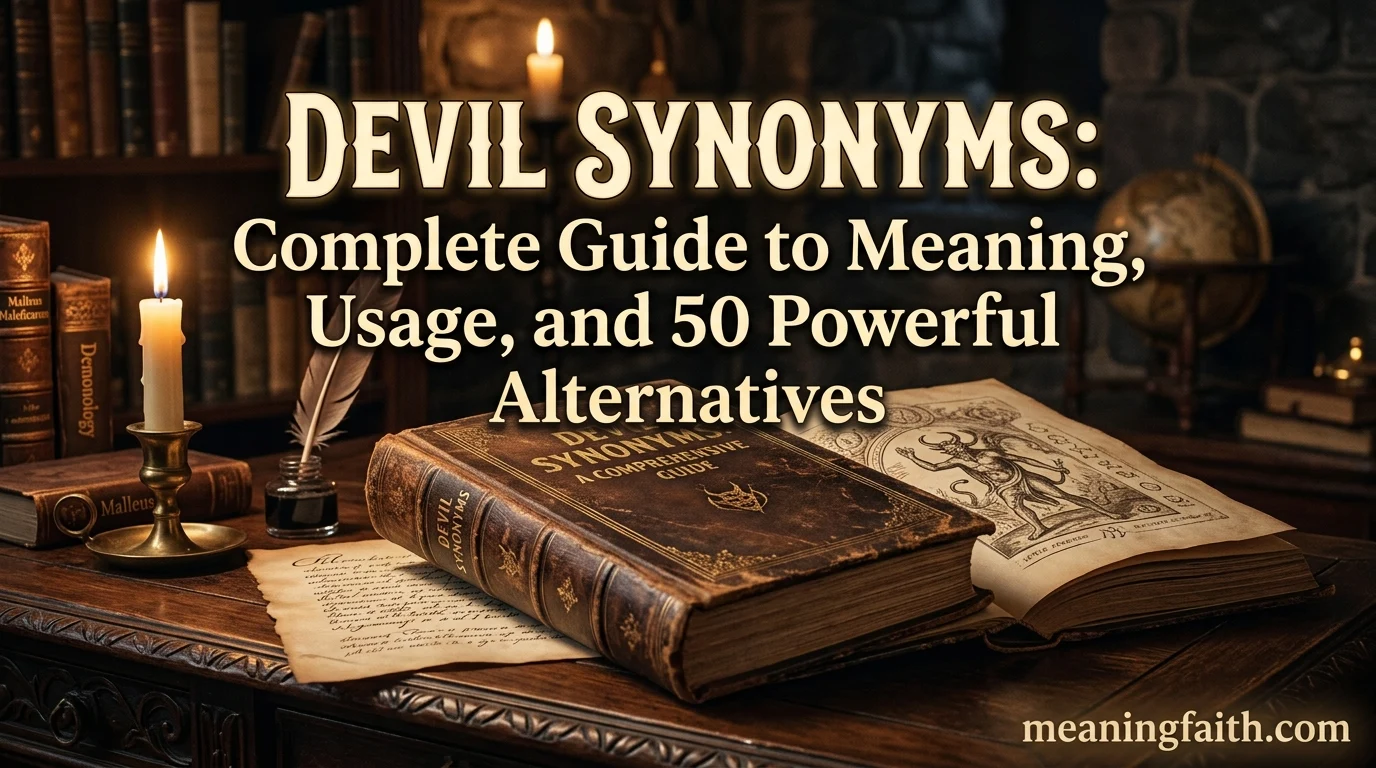
Devil synonyms are words that mean the same or nearly the same as devil. These alternative terms help us express ideas about evil, temptation, or a mischievous force in different ways. They are widely used in English writing, speaking, literature, and storytelling to make language more powerful and expressive.
The word devil often describes an evil spirit, a bad force, or a very tricky and harmful being. But in English, we do not always repeat the same word. We use devil synonyms to keep our language fresh and interesting. For example, instead of saying “the devil is here,” we might say “the demon is here” or “the evil spirit is here.”
Imagine you are writing a story. Repeating “devil” again and again sounds boring. But using different devil synonyms makes your writing more colorful and engaging. It also helps readers understand emotion, tone, and depth more clearly.
In simple English, devil synonyms are just different words for “devil.” They help us talk about evil, fear, or dark characters in many ways.
These words are useful for:
- Students: improve vocabulary and exam writing
- Bloggers: make content more engaging
- Content writers: avoid repetition and improve SEO
- Daily English users: speak more naturally and clearly
“Language is the dress of thought.” – Samuel Johnson
“Words are powerful; they shape how we see the world.” – Unknown
Devil Meaning
The devil meaning refers to an evil spirit or force in religious and cultural beliefs. It is often seen as the symbol of temptation and wrongdoing.
In simple terms, it represents bad energy or a negative force.
- Used in religion and stories
- Shows evil or temptation
- Common in literature and films
Devil Idioms
Devil idioms are phrases that use the word devil in a symbolic way. These idioms are common in everyday English.
They help express feelings in a creative way.
- “Speak of the devil”
- Used in casual conversations
- Makes language expressive
Devil in Literature
Devil in literature refers to how writers use the devil character in books and stories. It often represents evil, conflict, or temptation.
Writers use it to build strong drama.
- Found in novels and plays
- Represents conflict or evil force
- Used in storytelling themes
“The devil is in the details.” – Common proverb
Devil Symbolism
Devil symbolism means using the devil as a symbol of evil, fear, or temptation in art and writing.
It is common in culture and religion.
- Used in art and religion
- Symbol of fear or evil
- Represents temptation
Devil vs Demon
Devil vs demon explains the difference between two similar evil figures. The devil is often seen as a leader, while demons are followers.
This helps in understanding mythology better.
- Devil = main evil figure
- Demon = minor evil spirit
- Used in religious studies
COMPARISON TABLE
| Keyword | Meaning | Usage Type | Context |
|---|---|---|---|
| Devil Meaning | Definition of devil as evil force | Formal/educational | Religion, study |
| Devil Idioms | Phrases using “devil” | Casual | Daily conversation |
| Devil in Literature | Devil in stories and books | Formal/academic | Literature, writing |
| Devil Symbolism | Devil as a symbol | Formal/emotional | Art, culture |
| Devil vs Demon | Difference between devil and demon | Academic | Religion, mythology |
MAIN CONTENT – SYNONYMS LIST
1. Demon
Meaning: An evil spirit or dark being.
Examples:
- The demon scared everyone in the village.
- He wrote a story about a fire demon.
2. Fiend
Meaning: A very cruel and evil being.
Examples:
- The fiend attacked in the night.
- She called him a cold fiend.
3. Evil spirit
Meaning: A bad ghost or unseen force.
Examples:
- People feared the evil spirit in the house.
- The evil spirit caused strange sounds.
4. Satan
Meaning: The main figure of evil in religion.
Examples:
- Stories often talk about Satan.
- He warned about Satan’s tricks.
5. Lucifer
Meaning: A name often used for the devil.
Examples:
- Lucifer is shown in many myths.
- The book described Lucifer’s fall.
6. Dark lord
Meaning: A powerful evil ruler.
Examples:
- The dark lord ruled the land.
- Heroes fought the dark lord.
7. Evil one
Meaning: A name for a very bad force.
Examples:
- The evil one tempted the hero.
- They feared the evil one.
8. Beelzebub
Meaning: A traditional name for the devil.
Examples:
- Beelzebub appears in old stories.
- He read about Beelzebub in class.
9. Tempter
Meaning: Someone who leads others into bad actions.
Examples:
- The tempter offered easy lies.
- She resisted the tempter.
10. Trickster
Meaning: A being who deceives others.
Examples:
- The trickster fooled the king.
- He acted like a clever trickster.
11. Shadow
Meaning: A dark or hidden evil force.
Examples:
- A shadow followed him home.
- The shadow represented fear.
12. Evil force
Meaning: A powerful bad energy.
Examples:
- An evil force took over the place.
- They felt an evil force nearby.
13. Hellion
Meaning: A wild and evil person or spirit.
Examples:
- The hellion caused chaos.
- Kids feared the hellion.
14. Monster
Meaning: A scary and dangerous creature.
Examples:
- The monster came out at night.
- The story had a sea monster.
15. Wretch
Meaning: A very bad or evil person.
Examples:
- He called him a cruel wretch.
- The wretch destroyed the town.
16. Villain
Meaning: A bad character in stories.
Examples:
- The villain lost in the end.
- She played the villain role.
17. Beast
Meaning: A wild and dangerous creature.
Examples:
- The beast broke the gate.
- They ran from the beast.
18. Bogeyman
Meaning: A scary imaginary figure.
Examples:
- Kids feared the bogeyman.
- The bogeyman hides in stories.
19. Imp
Meaning: A small mischievous devil-like being.
Examples:
- The imp laughed loudly.
- He drew a funny imp.
20. Poltergeist
Meaning: A noisy ghost or spirit.
Examples:
- The poltergeist moved objects.
- They believed in a poltergeist.
21. Specter
Meaning: A ghostly figure.
Examples:
- A specter appeared at midnight.
- The specter scared him.
22. Phantom

Meaning: A ghost or illusion.
Examples:
- The phantom vanished quickly.
- She saw a phantom in dreams.
23. Apparition
Meaning: A ghostly appearance.
Examples:
- An apparition stood near the door.
- He claimed to see an apparition.
24. Shade
Meaning: A ghost or spirit of the dead.
Examples:
- A shade walked in silence.
- The shade scared the villagers.
25. Ghoul
Meaning: A creepy evil creature.
Examples:
- The ghoul hid in the graveyard.
- Stories talk about a ghoul.
26. Hades
Meaning: God of the underworld.
Examples:
- Hades rules the underworld.
- Myths describe Hades strongly.
27. Underworld king
Meaning: Ruler of the world of the dead.
Examples:
- The underworld king judged souls.
- Legends mention the underworld king.
28. Black spirit
Meaning: A dark evil spirit.
Examples:
- A black spirit haunted the forest.
- They feared the black spirit.
29. Sinister being
Meaning: A very dangerous evil creature.
Examples:
- A sinister being appeared.
- The sinister being smiled coldly.
30. Cursed one
Meaning: A person or spirit under a curse.
Examples:
- The cursed one walked alone.
- They called him the cursed one.
31. Night demon
Meaning: A demon active at night.
Examples:
- The night demon attacked dreams.
- Legends speak of a night demon.
32. Evil entity
Meaning: A non-human bad force.
Examples:
- The evil entity haunted the house.
- Scientists studied the evil entity.
33. Hell spawn
Meaning: A creature from hell.
Examples:
- The hell spawn screamed loudly.
- They fought the hell spawn.
34. Dark spirit
Meaning: A harmful unseen spirit.
Examples:
- A dark spirit followed him.
- The dark spirit vanished.
35. Soul stealer
Meaning: A being that takes souls.
Examples:
- The soul stealer attacked at night.
- Legends fear the soul stealer.
36. Nightmare being
Meaning: A creature from bad dreams.
Examples:
- The nightmare being frightened him.
- She saw a nightmare being.
37. Chaos bringer
Meaning: One who causes destruction.
Examples:
- The chaos bringer destroyed peace.
- He acted like a chaos bringer.
38. Evil lord
Meaning: A powerful evil ruler.
Examples:
- The evil lord ruled darkness.
- Heroes defeated the evil lord.
39. Darkness king
Meaning: Ruler of darkness.
Examples:
- The darkness king was feared.
- The story mentions a darkness king.
40. Sin lord
Meaning: One who represents sin.
Examples:
- The sin lord tempted people.
- He was called the sin lord.
41. Infernal being
Meaning: A being from hell.
Examples:
- The infernal being burned everything.
- Tales describe an infernal being.
42. Malicious spirit
Meaning: A harmful spirit.
Examples:
- A malicious spirit lived there.
- They felt a malicious spirit.
43. Wicked one
Meaning: A very bad person or force.
Examples:
- The wicked one smiled.
- They feared the wicked one.
44. Corrupt spirit

Meaning: A morally bad spirit.
Examples:
- A corrupt spirit influenced him.
- The corrupt spirit whispered lies.
45. Evil king
Meaning: A bad ruler.
Examples:
- The evil king destroyed towns.
- Stories warn about the evil king.
46. Dark ruler
Meaning: A ruler of evil forces.
Examples:
- The dark ruler attacked the land.
- The dark ruler was feared.
47. Tormentor
Meaning: One who causes pain or fear.
Examples:
- The tormentor never stopped.
- He called him a tormentor.
48. Fear bringer
Meaning: One who causes fear.
Examples:
- The fear bringer entered the town.
- Legends tell of a fear bringer.
49. Death spirit
Meaning: A spirit linked to death.
Examples:
- The death spirit appeared quietly.
- They feared the death spirit.
50. Doom bringer
Meaning: One who brings destruction.
Examples:
- The doom bringer arrived.
- The doom bringer ended peace.
CONCLUSION
Learning devil synonyms helps you become a stronger and more confident English user. These words improve your writing, speaking, blogging, and storytelling skills. Instead of repeating the same word, you can choose better and more creative alternatives. This makes your content more engaging and professional.
For students, it helps in exams and essays. Bloggers and writers, it improves SEO and readability. For daily users, it makes communication smoother and more natural. Practicing devil synonyms also helps you understand tone, emotion, and context in English better.

Daniel Parker is a tech researcher and contributor at Synulo.com, providing easy-to-understand guides on software, AI tools, and online resources.