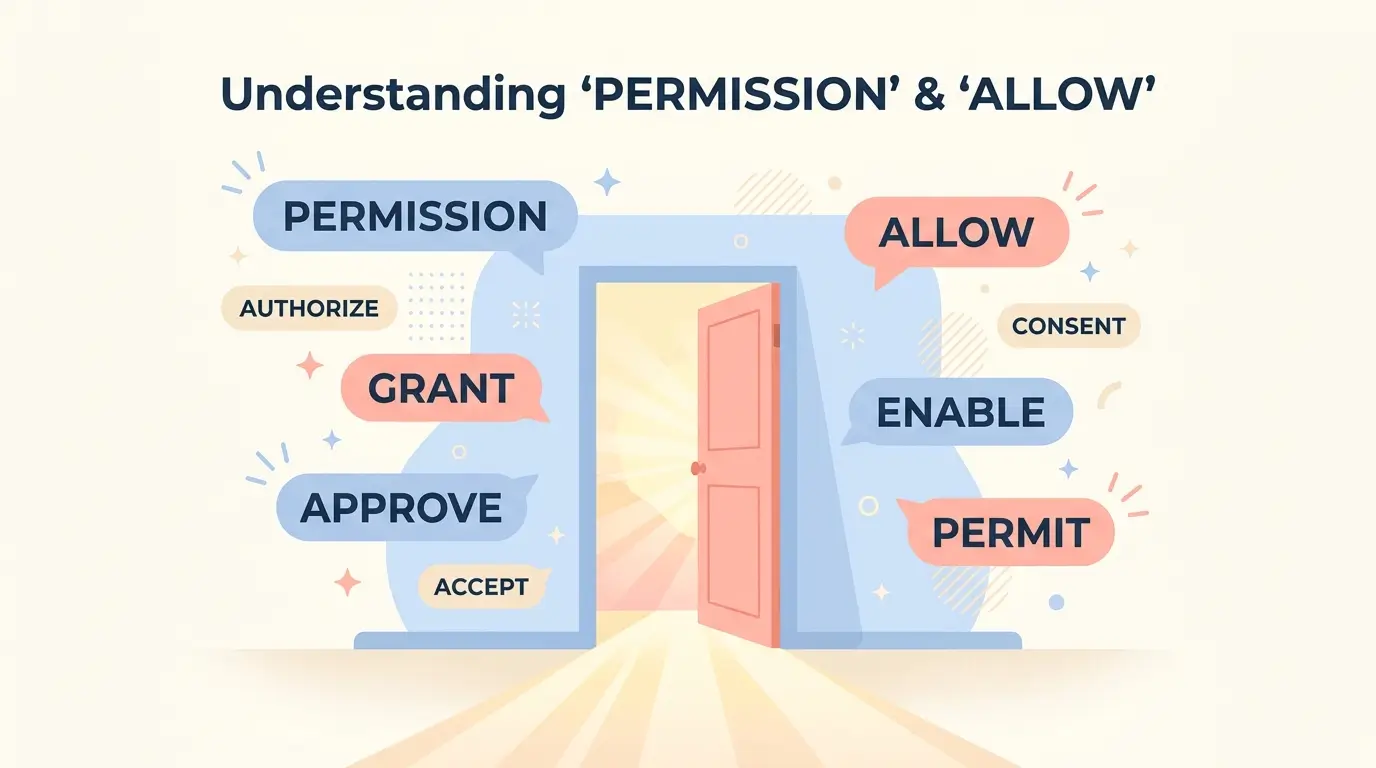
A synonym for allow is any word that gives permission or lets something happen, such as permit, let, authorize, grant, sanction, or enable. These words show that someone has the power to say yes to an action. Writers use them to avoid repeating “allow” too many times in one piece of writing.
Picture a teacher standing at the classroom door. A student asks, “Can I go to the library?” The teacher nods and says, “Sure, go ahead.” That single nod carries the same meaning as the word allow. It says yes. It opens a door. Words that mean allow show up everywhere, from parent-child talks to office memos. A manager who tells a team, “You may work from home on Fridays,” is using a synonym for allow without even thinking about it.
Learning these words matters for different people in different ways. Students need them to avoid repeating “allow” in essays and score higher marks. Bloggers need them to keep posts fresh and easy to read. Content writers need them to sound professional and avoid sounding robotic. Daily English users need them to sound natural in conversation, texts, and emails.
“Permission is not something you ask for. It is something you take, one small allowed step at a time.”
Once you build a strong list of these words, your writing instantly feels smarter and less repetitive. That is exactly what this guide will give you.
“The words we choose to grant space to others often show more character than the actions we allow ourselves.”
1. Permit
- Meaning: To officially allow someone to do something.
- Examples: The guard did not permit entry after nine. Her boss will permit a short lunch break.
2. Let
- Meaning: To allow something to happen without much fuss.
- Examples: Please let the kids play outside today. He would not let anyone borrow his car.
3. Authorize
- Meaning: To give official approval for an action or plan.
- Examples: The bank did not authorize that large payment. Management will authorize new hires next month.
4. Grant
- Meaning: To formally give someone something they asked for.
- Examples: The judge chose to grant the appeal. They will grant her request for leave.
5. Sanction
- Meaning: To officially approve or accept a certain action.
- Examples: The board did not sanction the merger. Coaches must sanction every new training method.
6. Approve
- Meaning: To agree that something is good or acceptable.
- Examples: The editor will approve the article tomorrow. Parents rarely approve of late curfews.
7. Consent
- Meaning: To agree and give permission for something to occur.
- Examples: She had to consent before the surgery. Both sides must consent to the terms.
8. Enable
- Meaning: To make it possible for someone to do something.
- Examples: This app will enable faster online payments. Good lighting can enable better night photos.
9. Empower
- Meaning: To give someone the power or right to act.
- Examples: Training programs empower workers to solve problems. The new law will empower small farmers.
10. License
- Meaning: To give official permission through a formal document.
- Examples: The city will license the food truck soon. They plan to license the software worldwide.
11. Endorse
- Meaning: To publicly support or approve of a plan.
- Examples: The mayor did not endorse the proposal. Experts widely endorse this study method.
12. Tolerate
- Meaning: To accept behavior even if you dislike it.
- Examples: Her manager will not tolerate constant lateness. Some teachers barely tolerate classroom noise.
13. Admit
- Meaning: To allow someone to enter a place or group.
- Examples: The club began to admit new members. This ticket will admit two guests.
14. Concede
- Meaning: To reluctantly allow or accept something as true.
- Examples: He finally conceded that she was right. The team had to concede the point.
15. Yield
- Meaning: To give in and allow something after pressure.
- Examples: The committee chose to yield to demands. She refused to yield any ground.
16. Warrant
- Meaning: To justify or give clear grounds for something.
- Examples: Nothing seemed to warrant such a harsh reply. His skill did warrant the promotion.
17. Condone
- Meaning: To accept or allow behavior that is often wrong.
- Examples: Schools should never condone bullying of any kind. He refused to condone dishonest tactics.
18. Countenance
- Meaning: To accept and support an idea or action.
- Examples: She would not countenance such rude behavior. Leaders should not countenance unfair treatment.
19. Brook
- Meaning: To tolerate or allow, mostly used with “no.”
- Examples: The captain would brook no arguments today. She will brook no further delays.
20. Suffer
- Meaning: To allow something unpleasant to happen or continue.
- Examples: He would not suffer fools gladly at work. She refused to suffer any more excuses.
21. Greenlight
- Meaning: To give official approval to start a project.
- Examples: Studios finally greenlight the long-awaited sequel. The city will greenlight the new park.
22. Clear
- Meaning: To give approval after checking something is safe.
- Examples: Doctors will clear him for practice soon. Security must clear every visitor first.
23. Certify
- Meaning: To officially confirm that something meets a standard.
- Examples: Inspectors will certify the building is safe. This lab can certify organic food products.
24. Validate
- Meaning: To officially confirm something is correct or acceptable.
- Examples: The system will validate your ticket instantly. Staff must validate every parking pass.
25. Ratify
- Meaning: To formally approve a treaty, law, or plan.
- Examples: Lawmakers voted to ratify the new treaty. Members must ratify the club charter.
26. Legalize
- Meaning: To make something officially allowed under the law.
- Examples: Some states chose to legalize the practice. Voters may soon legalize the new policy.
27. Legitimize
- Meaning: To make something accepted as fair and lawful.
- Examples: The report helped legitimize her business claims. New rules will legitimize remote work options.
28. Entitle
- Meaning: To give someone the right to do something.
- Examples: This pass will entitle you to entry. Members are entitled to free parking.
29. Qualify
- Meaning: To meet the requirements needed for permission.
- Examples: Only seniors qualify for the discount rate. She did not qualify for the loan.
30. Commission
- Meaning: To officially give someone the task or right to act.
- Examples: The city will commission a new bridge study. They plan to commission local artists soon.
31. Charter
- Meaning: To grant official rights through a formal agreement.
- Examples: The group hopes to charter a new branch. They will charter a private boat trip.
32. Privilege
- Meaning: To grant a special right not given to everyone.
- Examples: The club chose to privilege long-term members first. Staff privilege senior workers with better shifts.
33. Indulge
- Meaning: To allow someone to enjoy something freely.
- Examples: Grandparents often indulge kids with extra treats. She decided to indulge her curiosity today.
34. Humor
- Meaning: To allow someone’s wish just to please them.
- Examples: He chose to humor his little sister’s game. Just humor me and try it once.
35. Accommodate
- Meaning: To allow space or adjust plans for someone’s needs.
- Examples: The hotel will accommodate late check-ins gladly. Teachers try to accommodate every student’s pace.
36. Facilitate
- Meaning: To make an action or process easier to allow.
- Examples: New software will facilitate faster team approvals. Better signs can facilitate smoother traffic flow.
37. Okay
- Meaning: To informally approve or give the go-ahead.
- Examples: Mom will okay the trip if we ask. He quickly okayed the plan for Friday.
38. Sign off on
- Meaning: To formally approve a plan, usually in writing.
- Examples: The boss must sign off on every budget. She will sign off on the design tomorrow.
39. Wave through
- Meaning: To let something pass without much checking.
- Examples: Guards simply waved through the delivery truck. Officers waved through the line of cars.
40. Let through
- Meaning: To allow someone or something to pass a point.
- Examples: Security will let through anyone with a badge. The gate finally let through the crowd.
41. Give leave
- Meaning: To formally allow someone to be absent or act.
- Examples: The court chose to give leave for appeal. His firm will give leave for family emergencies.
42. Give consent
- Meaning: To formally agree and allow something to happen.
- Examples: Parents must give consent for the school trip. She refused to give consent to the deal.
43. Agree to
- Meaning: To accept a plan or allow it to proceed.
- Examples: They finally agreed to the new schedule. He would not agree to those strict terms.
44. Allow access
- Meaning: To let someone reach or use a place freely.
- Examples: This badge will allow access to the lab. Staff must allow access for safety checks.
45. Give the go-ahead
- Meaning: To tell someone they can start an action.
- Examples: The client finally gave the go-ahead for launch. Doctors will give the go-ahead after tests.
46. Give the nod
- Meaning: To informally show approval for a plan or idea.
- Examples: The coach gave the nod for the new play. She gave the nod, so we proceeded.
47. Pass
- Meaning: To approve a plan, rule, or piece of work.
- Examples: The council voted to pass the new rule. Judges will pass the safety inspection soon.
48. Permit entry
- Meaning: To formally allow someone to come inside a place.
- Examples: This card will permit entry after hours. Staff must permit entry only with ID.
49. Allow room for
- Meaning: To leave space so something else can happen too.
- Examples: Good plans always allow room for change. Try to allow room for honest feedback.
50. Make allowances for
- Meaning: To accept or adjust because of special circumstances.
- Examples: Teachers should make allowances for tired students. We must make allowances for new team members.
Synonyms for Allow Me To
When writing formal notes, “allow me to” often sounds stiff. Try softer openers like permit me to, let me, or kindly allow me to. These small swaps keep introductions polite without sounding repetitive. Emails, speeches, and cover letters all benefit from this shift, since readers respond better to natural, varied phrasing than to the same stiff opener every single time.
Synonyms for Allow or Permit
“Allow or permit” is common in rules and policies. Writers often swap it with grant or sanction, authorize or approve, or let or license. These pairs work well in formal writing, contracts, and school essays. Choosing the right pair depends on tone: legal writing leans toward authorize, while everyday writing leans toward simple words like let or approve.
Synonyms for Allow in an Essay
Essays need variety to avoid sounding repetitive to readers and graders alike. Instead of “allow,” try enable, grant, permit, or make possible. These words fit academic tone well and show a wider vocabulary. Using different synonyms for allow across paragraphs also helps essays flow better and shows stronger command of formal English writing skills overall.
Formal Synonyms for Allow
Formal writing calls for stronger, more official words. Authorize, sanction, ratify, and grant all fit business letters, legal papers, and official reports. These words sound confident and professional. Avoid casual choices like “let” or “okay” in formal settings, since they can weaken the tone of an otherwise serious, professional, and carefully structured piece of writing.
Synonyms for Allowing Someone to Do Something
This phrase appears often in workplace and parenting talk. Good swaps include giving someone permission, letting someone proceed, or granting someone the right. These alternatives sound natural in spoken English and written English alike. Choosing the right one depends on how formal or casual the situation feels, whether it’s a memo or a quick text message.
FAQ Section
What is the synonym of allow?
Common synonyms of allow include permit, let, authorize, grant, sanction, and enable. Each word carries a slightly different tone. “Let” feels casual and everyday, while “authorize” feels formal and official. “Grant” often appears in legal or ceremonial writing. Choosing the right synonym depends on your audience, the formality of your writing, and whether you want the tone to feel warm, neutral, or strictly professional in nature.
What can I use instead of allow?
Instead of allow, you can use permit, enable, sanction, license, or give consent. These words work in different settings. “Enable” fits technology and process writing well. “License” suits legal or business contexts. “Give consent” fits medical or personal situations. Picking the right word instead of allow makes your writing feel fresh, accurate, and far less repetitive across long paragraphs or essays.
What is a professional way to say allowed?
Professional alternatives to “allowed” include authorized, sanctioned, approved, permitted, and granted. These words appear often in emails, contracts, and workplace policies. For example, instead of saying “employees are allowed to leave early,” a professional memo might say “employees are authorized to leave early.” This small shift instantly makes writing sound more formal, structured, and appropriate for business communication.
What is another word for would allow?
“Would allow” can become would permit, would enable, would grant, or would make possible. These phrases work well in conditional sentences. For example, “This plan would allow growth” becomes “This plan would enable growth.” Swapping “would allow” keeps writing varied, especially in essays or reports where the same conditional phrase might otherwise repeat many times in a row.
Conclusion
Learning synonyms for allow does more than fill up a vocabulary list. It changes how your writing sounds and how readers feel about it. Strong word choices make blog posts easier to read, essays more impressive, and daily conversations more natural.
Instead of repeating “allow” again and again, you now have fifty fresh options ready to use, from simple everyday words like let and okay to formal choices like authorize and sanction.
Try using a few of these words the next time you write an email, finish a school essay, or chat with a friend. Small changes in word choice build big habits over time, and those habits shape how confident and skilled your English sounds to others around you.
“Words are the only tools we truly own, so choose the ones that let your meaning through clearly.”
Practice a little every day, and soon these synonyms will feel as natural as the word allow itself.
“A wider vocabulary does not just permit better writing. It grants better thinking.”

Ethan Brooks is a content creator at Synulo.com who shares practical insights on technology, productivity tools, and the latest digital trends.