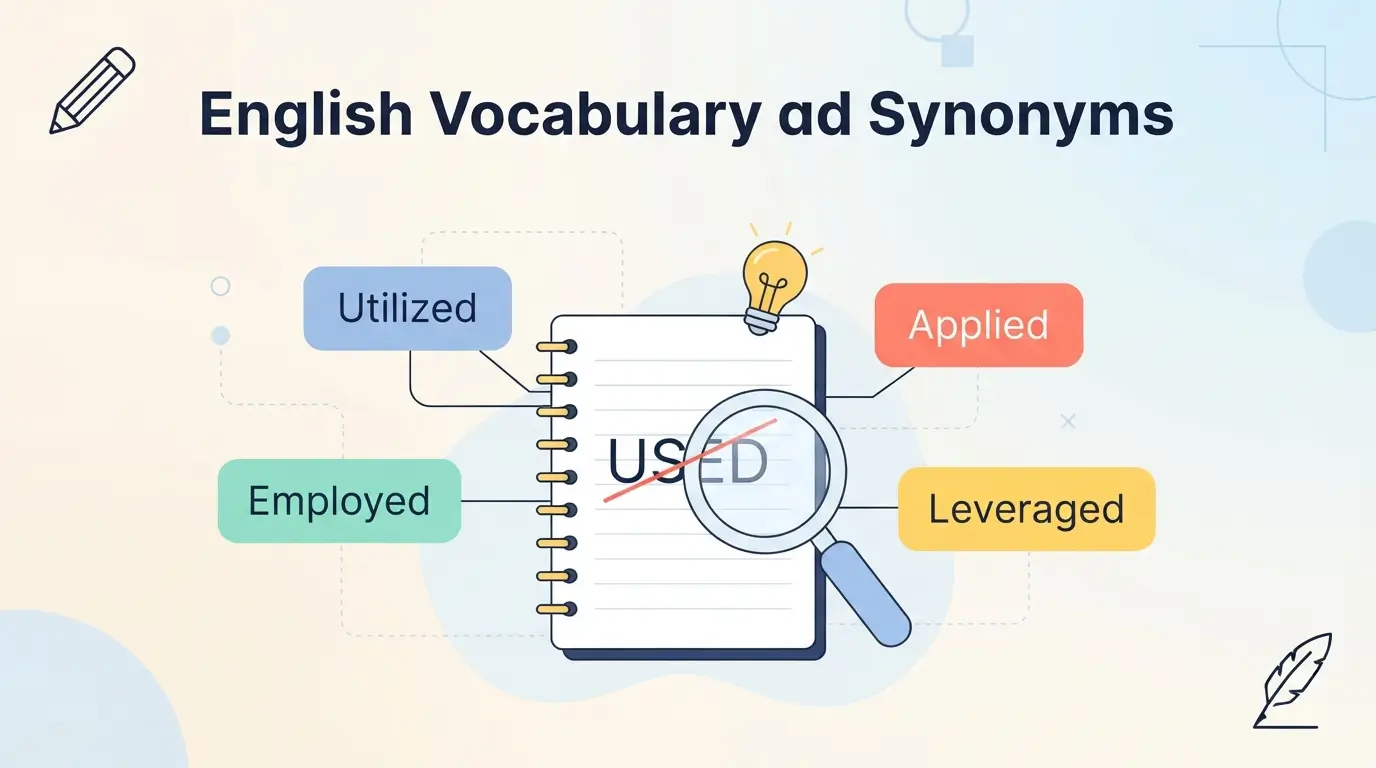
A synonym for used is a word that means the same thing without repeating “used” again and again. Common examples include utilized, employed, applied, and secondhand. These used synonyms make your writing sound fresh, clear, and more professional in essays, emails, and daily conversation.
Picture this. You are writing an email to your boss. You type the word “used” three times in one paragraph. It looks lazy. It looks tired. You pause, stare at the screen, and wonder if there is a better way to say it.
This happens to everyone. A student writes an essay and repeats “used” in every sentence. A blogger describes a product review and the word “used” pops up again and again. A teacher circles the same word five times in red ink. Learning used synonyms fixes this small but annoying problem.
Here is why this matters. Students need fresh words for better grades. Bloggers need variety to keep readers interested. Content writers need synonyms to rank higher on Google. Daily English speakers need better words to sound more natural and confident.
“The difference between the almost right word and the right word is really a large matter.” This idea from Mark Twain reminds us that small word choices carry big weight.
Learning new words is not just about grammar. It is about expressing yourself with more color and precision. “Words are, in my not-so-humble opinion, our most inexhaustible source of magic.” This thought captures why building a strong vocabulary feels so rewarding.
Why Vocabulary Variety Matters
Repeating the same word feels flat. It also makes writing harder to read. Good writers rotate their words the same way a good cook rotates spices. A meal made with only salt tastes boring. Writing made with only one verb feels the same way.
“To read without reflecting is like eating without digesting.” This quote fits perfectly here, because learning a synonym is only useful when you actually reflect on its meaning and practice using it. Simply memorizing a list will not help unless you apply the words in real sentences, real emails, and real conversations.
The 50 Best Synonyms for “Used”
1. Utilized
- Meaning: To use something in a smart and useful way for a purpose.
- Examples: She utilized her free time wisely today. The team utilized every resource they had.
2. Employed
- Meaning: To put a tool, method, or skill into practical action.
- Examples: He employed a clever strategy to win. The company employed new software last month.
3. Applied
- Meaning: To put something into action for a specific task.
- Examples: She applied the lesson to her homework. He applied fresh paint to the wall.
4. Exploited
- Meaning: To use something fully, sometimes in an unfair way.
- Examples: The workers felt exploited by long hours. He exploited the loophole in the rules.
5. Handled
- Meaning: To manage or work with something carefully and directly.
- Examples: She handled the situation with total calm. He handled the machine like an expert.
6. Operated
- Meaning: To run or control a machine, tool, or system.
- Examples: He operated the crane with great skill. She operated the printer without any help.
7. Wielded
- Meaning: To hold and use a tool or power with control.
- Examples: The knight wielded his sword bravely. She wielded her influence to help others.
8. Harnessed
- Meaning: To control and use energy or power for good results.
- Examples: They harnessed solar power for the house. She harnessed her anger into motivation.
9. Deployed
- Meaning: To move or apply resources into position for action.
- Examples: The company deployed new staff quickly. Soldiers were deployed to the border.
10. Leveraged
- Meaning: To use something to gain extra advantage or benefit.
- Examples: She leveraged her contacts to get hired. He leveraged data to boost sales.
11. Worn
- Meaning: Something clothing-related that has already been used before.
- Examples: These shoes look worn but comfortable. My jacket is worn from years of use.
12. Secondhand
- Meaning: Something owned or used by another person before you.
- Examples: I bought a secondhand bicycle yesterday. She loves shopping for secondhand furniture.
13. Preowned
- Meaning: Something that already had one owner before the current one.
- Examples: He drives a preowned car happily. The store sells preowned electronics cheaply.
14. Exercised
- Meaning: To use a right, skill, or power in action.
- Examples: She exercised her right to vote. He exercised patience during the meeting.
15. Practiced
- Meaning: To do something regularly to use or improve a skill.
- Examples: He practiced his speech many times. She practiced kindness every single day.
16. Adopted
- Meaning: To choose and start using a method, plan, or habit.
- Examples: The school adopted a new schedule. She adopted a healthier morning routine.
17. Implemented
- Meaning: To put a plan or idea into real action.
- Examples: They implemented the new policy fast. He implemented changes to the budget.
18. Engaged
- Meaning: To involve or use something actively in a task.
- Examples: She engaged every tool available to her. He engaged the brakes suddenly.
19. Consumed
- Meaning: To use up something like time, energy, or food.
- Examples: The project consumed most of his week. She consumed all her energy quickly.
20. Expended
- Meaning: To spend or use up effort, money, or resources.
- Examples: He expended great effort on the essay. They expended funds on new equipment.
21. Drained
- Meaning: To use up something completely until nothing remains.
- Examples: The trip drained her savings account fast. Long meetings drained his energy completely.
22. Depleted
- Meaning: To reduce a supply until very little is left.
- Examples: The storm depleted the town’s supplies. Overuse depleted the soil’s nutrients.
23. Accustomed
- Meaning: Familiar with something because you use it often.
- Examples: She is accustomed to waking up early. He grew accustomed to the noisy city.
24. Habituated
- Meaning: Used to something so much it feels normal now.
- Examples: They became habituated to the cold weather. He is habituated to long work hours.
25. Worn-out
- Meaning: Something old and damaged from being used a lot.
- Examples: These worn-out tires need replacing soon. Her worn-out shoes finally fell apart.
26. Pre-used
- Meaning: Already used by someone before the current owner.
- Examples: He bought a pre-used laptop online. The shop only sells pre-used clothing.
27. Recycled
- Meaning: Used again after being processed or cleaned up.
- Examples: This paper is made from recycled material. She recycled old bottles into planters.
28. Repurposed
- Meaning: Used again for a completely new purpose or goal.
- Examples: He repurposed an old barn into a studio. They repurposed jars as candle holders.
29. Tapped
- Meaning: To draw on or use a resource that is available.
- Examples: She tapped into her creative side. The team tapped new funding sources.
30. Manipulated
- Meaning: To use or handle something skillfully, sometimes cleverly.
- Examples: He manipulated the clay into shape. She manipulated the numbers carefully.
31. Managed
- Meaning: To control, use, or organize something with responsibility.
- Examples: She managed the budget wisely this year. He managed the store’s daily operations.
32. Administered
- Meaning: To use authority to organize or apply something officially.
- Examples: The nurse administered the medicine carefully. He administered the test to students.
33. Executed
- Meaning: To carry out or use a plan successfully.
- Examples: She executed the plan without mistakes. He executed his duties perfectly.
34. Mobilized
- Meaning: To organize and use people or resources for action.
- Examples: The city mobilized volunteers after the storm. He mobilized his team quickly.
35. Invoked
- Meaning: To use a rule, law, or idea to support something.
- Examples: She invoked her right to silence. He invoked an old tradition proudly.
36. Resorted
- Meaning: To use something, often as a last available option.
- Examples: He resorted to asking for help. She resorted to an old recipe.
37. Availed
- Meaning: To take and use an opportunity that is offered.
- Examples: She availed herself of the discount. He availed the free training course.
38. Enlisted
- Meaning: To use someone’s help or support for a task.
- Examples: She enlisted her friends to help move. He enlisted experts for advice.
39. Commandeered
- Meaning: To take and use something quickly, often without asking.
- Examples: He commandeered the extra chair nearby. She commandeered the meeting room fast.
40. Capitalized
- Meaning: To use a chance or situation to gain an advantage.
- Examples: She capitalized on the sudden opportunity. He capitalized on his strong skills.
41. Old
- Meaning: Something that has existed or been used for a long time.
- Examples: He kept his old notebook safe. She wore her old favorite sweater.
42. Aged
- Meaning: Something that has become older through time and use.
- Examples: The aged wood still looked strong. Her aged dictionary had torn pages.
43. Spent
- Meaning: Used up completely, with nothing left to give.
- Examples: He felt totally spent after the race. Her energy was spent by evening.
44. Called upon
- Meaning: Asked to use skill, help, or knowledge for something.
- Examples: She was called upon to speak. He was called upon during the crisis.
45. Drawn on
- Meaning: To use knowledge, memory, or experience for support.
- Examples: She drew on her past experience. He drew on old lessons wisely.
46. Made use of
- Meaning: To use something available in a smart, useful way.
- Examples: She made use of her spare time. He made use of every tool given.
47. Put to use
- Meaning: To take something and apply it in real action.
- Examples: He put his skills to use. She put the advice to use immediately.
48. Taken advantage of
- Meaning: To use a chance, benefit, or resource fully and smartly.
- Examples: She took advantage of the free class. He took advantage of the sunny weather.
49. Put into practice
- Meaning: To actually use an idea or lesson in real life.
- Examples: She put the tips into practice fast. He put the theory into practice today.
50. Worked with
- Meaning: To use or cooperate with a tool, person, or material.
- Examples: She worked with limited supplies smartly. He worked with the new software daily.
Commonly Used Synonyms
Some words for “used” show up everywhere in daily English. Utilized, employed, and applied are the top picks for both speaking and writing. These commonly used synonyms fit school essays, workplace emails, and casual chats equally well. They are safe, natural choices that never sound out of place, which makes them a great starting point for beginners building their vocabulary.
Used Synonyms in IELTS
IELTS examiners reward vocabulary range, so repeating “used” hurts your score. Words like utilized, employed, exploited, and implemented show a higher band level. Try utilized in Task 2 essays and implemented when discussing policies or solutions. These used synonyms in IELTS writing prove you can express ideas with more academic precision, which examiners specifically look for.
Used Synonyms for Resume
A resume should never repeat the same verb twice. Strong choices include utilized, leveraged, managed, and executed. Writing “leveraged market research to boost sales” sounds far more powerful than “used research.” These used synonyms for resume writing highlight action and results, helping your application stand out to busy hiring managers scanning dozens of documents quickly.
Used to Do Synonyms
When describing past habits, “used to” needs fresh alternatives too. Try accustomed to, habituated to, or simply describing the routine directly, like “practiced daily” instead of “used to practice daily.” These used to do synonyms help storytelling feel more natural, especially in personal essays, memoirs, or casual conversations about childhood routines and old habits.
Used as a Tool Synonyms
When something serves as a tool or method, try harnessed, wielded, or tapped. Saying “she harnessed social media for marketing” sounds sharper than “she used social media.” These used as a tool synonyms work well in business writing, tech articles, and creative writing where tools, power, or resources play a central role in the sentence.
Frequently Asked Questions
What is the synonym of used?
Common synonyms of “used” include utilized, employed, applied, and handled. Each one fits slightly different situations. “Utilized” works well in formal writing, while “employed” suits both formal and casual tone. Choosing the right synonym depends on context, tone, and whether you are describing a tool, method, skill, or past habit in your sentence.
What is a good synonym for use?
A good synonym for “use” is employ, apply, or utilize. These words work in almost any sentence structure. For example, “employ a strategy” or “apply a method” both sound natural. Choose utilize for formal writing and use or apply for everyday, casual conversations with friends or coworkers.
What is a better word than used?
Better alternatives depend on the sentence’s tone. For formal writing, choose utilized or implemented. For casual speech, try worked with or put to use. Academic essays benefit from applied or employed. There is no single “best” word since context always decides which synonym feels most natural and accurate.
What is a stronger word for use?
Stronger, more powerful words for “use” include harnessed, leveraged, wielded, and exploited. These words suggest control, power, or clever strategy rather than simple action. For instance, “she leveraged her network” sounds far more confident and active than the plain phrase “she used her network” in a resume or essay.
Used Synonyms in English
English offers dozens of alternatives to “used,” from casual choices like worn and old to formal picks like utilized and implemented. Native speakers naturally rotate these words without even noticing.
- Casual settings favor simple words like worn or old.
- Formal writing favors utilized, applied, or implemented.
- Academic essays often mix both depending on the sentence.
Use Synonym
The base word “use” also has many alternatives, including apply, employ, and utilize. Picking the right one depends on formality and context.
- Apply fits methods, rules, and lessons.
- Employ fits strategies, tools, and skills.
- Utilize fits formal, professional, or academic writing.
Used Synonym Academic Writing
Academic papers demand precision and formal tone, so casual words like “used” often feel weak. Strong academic alternatives include utilized, employed, implemented, and applied.
- Utilized suits research methodology sections well.
- Employed works nicely for describing techniques.
- Implemented fits policy or system-based discussions.
Another Word for Used in an Essay
Essays need variety to keep readers engaged and avoid repetition. Good options include applied, adopted, practiced, and exercised, each carrying a slightly different shade of meaning.
- Applied suits lessons, rules, or knowledge.
- Adopted suits new habits or methods.
- Practiced suits skills or routines.
Used to Synonym Past Tense
Describing past habits smoothly needs alternatives beyond “used to.” Try accustomed to, habituated to, or simply restate the past action directly using a strong verb instead.
- Accustomed to fits gentle, ongoing past habits.
- Habituated to fits stronger, repeated routines.
- Direct past-tense verbs often sound more natural overall.
Used Synonyms Formal
Formal writing calls for polished, professional vocabulary. Top formal picks include utilized, implemented, administered, and executed, all common in business reports and academic papers.
- Utilized fits general formal contexts smoothly.
- Implemented fits policies, plans, and systems.
- Administered fits official duties or procedures.
Synonym for Used or Utilized
“Used” and “utilized” often overlap, but “utilized” sounds more formal and deliberate. Other close alternatives include employed, applied, and leveraged, depending on the sentence’s purpose and tone.
- Utilized suggests thoughtful, purposeful action.
- Employed suggests active, hands-on application.
- Leveraged suggests using something for extra advantage.
Being Used Synonym Positive
Sometimes “used” carries a negative feel, like being taken advantage of. Positive alternatives include valued, relied upon, and called upon, which highlight trust rather than exploitation.
- Valued shows appreciation and respect.
- Relied upon shows trust and dependability.
- Called upon shows recognition of someone’s skill.
| Keyword | Meaning | Usage Type | Context |
| Used synonyms in English | General alternatives to “used” | Casual/Formal | Daily conversation, writing |
| Use synonym | Alternatives to the base word “use” | Casual/Formal | General everyday writing |
| Used synonym academic writing | Formal alternatives for research or papers | Formal | School, university, research |
| Another word for used in an essay | Essay-specific replacement words | Formal | Student essays, assignments |
| Used to synonym past tense | Words replacing “used to” for habits | Casual/Formal | Storytelling, memoirs |
| Used synonyms formal | Professional, polished alternatives | Formal | Business reports, resumes |
| Synonym for used or utilized | Comparing “used” and “utilized” | Formal | Academic and professional writing |
| Being used synonym positive | Positive-toned alternatives | Emotional/Positive | Relationships, recognition, trust |
Conclusion
Learning used synonyms does more than fill up a vocabulary list. It changes how you write, speak, and connect with people every single day. A stronger word choice makes your blog post more engaging. It makes your essay sound smarter. Makes your speech feel more confident. It even makes a simple email feel more thoughtful and polished.
Try using one new synonym today. Swap “used” for utilized in your next work email. Try applied in your next school essay. Practice worn or old the next time you describe secondhand items. Small changes like these build big habits over time, and soon these words will feel completely natural.
“Language is the road map of a culture. It tells you where its people come from and where they are going.” Every new word you learn adds another marker to your own personal map of expression.
“The limits of my language mean the limits of my world.” Expanding your vocabulary, one synonym at a time, quietly expands the world you are able to describe, explain, and share with others.

Aksone fackts is a technology writer at Synulo.com, covering AI tools, software reviews, and digital solutions to help readers stay ahead in the modern tech world.