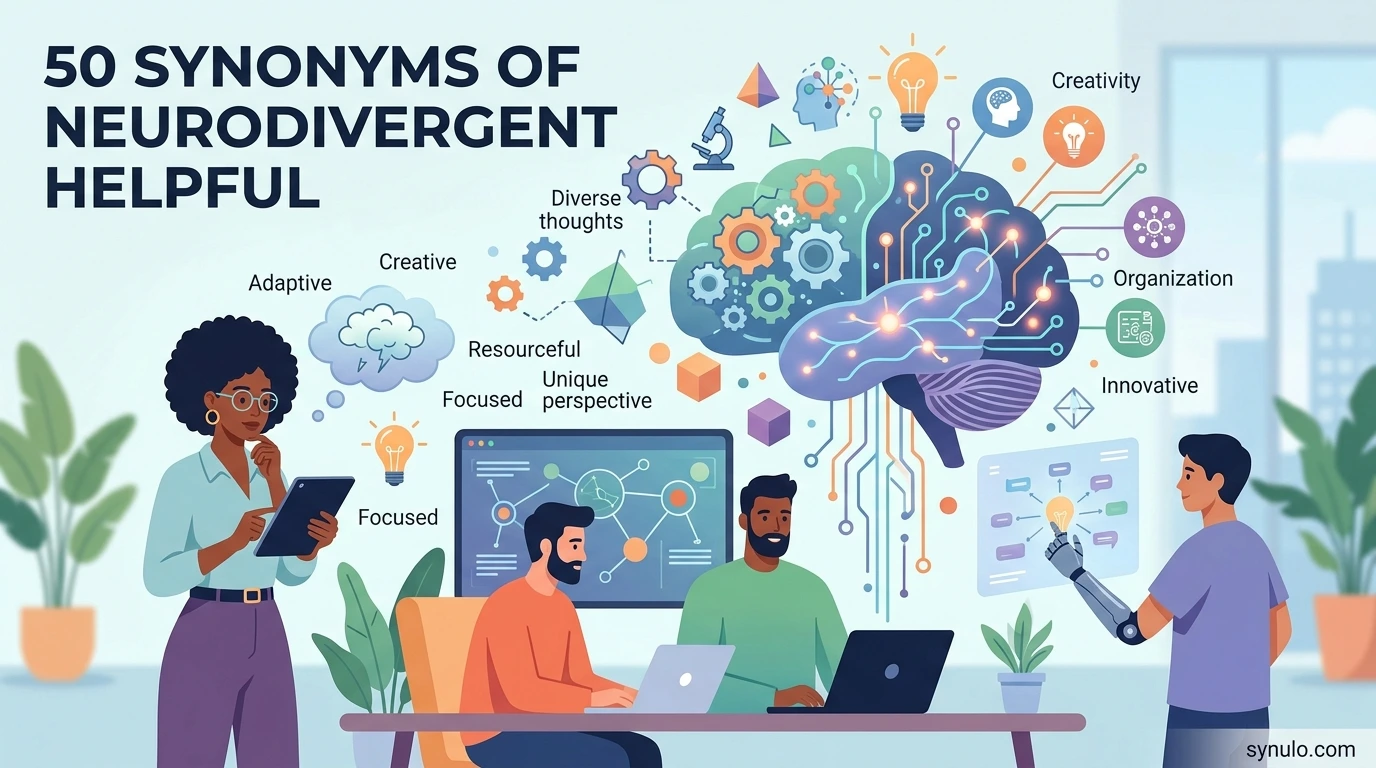
Synonyms of neurodivergent include words like differently wired, neurologically diverse, cognitively different, and uniquely minded. These terms describe people whose brains work in ways that differ from common patterns. They are often used to talk about differences in thinking, learning, attention, communication, or sensory experiences in a respectful way.
Maya noticed her classmate solved problems in a creative way but learned best with different methods. Her teacher explained that everyone’s brain can work differently, and some people may use words connected to neurodivergent experiences.
For example, a student who thinks visually and needs quiet spaces may describe their learning style in a different way. Learning synonyms of neurodivergent helps people choose kinder and clearer words.
Students can use these words to improve vocabulary. Bloggers can create respectful content. Content writers can explain topics better. Daily English users can communicate with more care.
Words shape how we understand people. Choosing the right words can make conversations more welcoming.
“The right words can open doors to better understanding.”
Simple vocabulary choices can help people feel seen and respected. Learning different terms also improves writing skills and everyday communication.
“Kind language creates stronger connections between people.”
1. Differently Wired
- Meaning: Describes a brain that works in a different way.
- Examples: She is differently wired and creative. He learns best with new methods.
2. Neurologically Diverse
- Meaning: Refers to natural differences in how brains function.
- Examples: Our group includes neurologically diverse learners. They support different thinking styles.
3. Cognitively Different
- Meaning: Describes unique ways of thinking and processing information.
- Examples: He has a cognitively different approach. She solves problems creatively.
4. Uniquely Minded
- Meaning: Describes someone with an uncommon thinking style.
- Examples: Her uniquely minded ideas inspire others. He shares unique solutions.
5. Brain-Different
- Meaning: Shows that a person’s brain works differently.
- Examples: She is brain-different and talented. He explains ideas clearly.
6. Neurodiverse
- Meaning: Describes natural variation among different human brains.
- Examples: The workplace welcomes neurodiverse employees. Neurodiverse students need support.
7. Neurologically Different
- Meaning: Means having differences in brain development or function.
- Examples: He has neurologically different learning needs. She thinks in special ways.
8. Mentally Diverse
- Meaning: Describes different patterns of thinking and understanding.
- Examples: Our team is mentally diverse. Different minds create ideas.
9. Different Thinking
- Meaning: Describes a person’s unique way of processing thoughts.
- Examples: His different thinking helps projects. She brings different thinking skills.
10. Alternative Thinker
- Meaning: Describes someone who thinks outside common patterns.
- Examples: She is an alternative thinker. He finds unusual answers.
11. Creative Thinker
- Meaning: Describes someone who creates fresh ideas.
- Examples: He is a creative thinker. She designs original solutions.
12. Unique Learner
- Meaning: Describes someone with a personal learning style.
- Examples: She is a unique learner. Teachers understand her needs.
13. Different Learner
- Meaning: Describes someone who learns in another way.
- Examples: He is a different learner. She enjoys visual lessons.
14. Individual Thinker
- Meaning: Describes someone with personal thoughts and ideas.
- Examples: She is an individual thinker. He shares thoughtful opinions.
15. Innovative Thinker
- Meaning: Describes someone who develops new ideas.
- Examples: He is an innovative thinker. She creates new designs.
16. Original Thinker
- Meaning: Describes someone with uncommon thoughts and ideas.
- Examples: She is an original thinker. He writes fresh concepts.
17. Outside-the-Box Thinker
- Meaning: Describes someone who thinks beyond usual methods.
- Examples: He is an outside-the-box thinker. She solves puzzles differently.
18. Diverse Mind
- Meaning: Describes a brain with unique abilities and views.
- Examples: Her diverse mind helps others. He shares creative thoughts.
19. Different Processor
- Meaning: Describes someone who processes information uniquely.
- Examples: She is a different processor. He needs extra time.
20. Unique Processor

- Meaning: Describes a person with a special information style.
- Examples: He is a unique processor. She learns through examples.
21. Neuro-Variant
- Meaning: Describes a person with a brain variation.
- Examples: She identifies as neuro-variant. He values his differences.
22. Brain Variant
- Meaning: Describes natural differences in brain patterns.
- Examples: Everyone has brain variants. Her brain variant works differently.
23. Learning Variant
- Meaning: Describes a different way of learning.
- Examples: He has a learning variant. She prefers hands-on tasks.
24. Thought Divergent
- Meaning: Describes someone with different thought patterns.
- Examples: She is thought divergent. He explores many ideas.
25. Cognitive Variant
- Meaning: Describes differences in thinking abilities.
- Examples: He has a cognitive variant. She learns differently.
“Respect grows when we understand that every mind has value.”
26. Mental Variant
- Meaning: Describes differences in mental processing styles.
- Examples: She has a mental variant. He uses helpful strategies.
27. Perceptive Thinker
- Meaning: Describes someone who notices things differently.
- Examples: He is a perceptive thinker. She notices small details.
28. Insightful Thinker
- Meaning: Describes someone with deep and unique ideas.
- Examples: She is an insightful thinker. He gives helpful views.
29. Flexible Thinker
- Meaning: Describes someone who considers many possibilities.
- Examples: He is a flexible thinker. She adapts quickly.
30. Diverse Learner
- Meaning: Describes someone who learns in varied ways.
- Examples: She is a diverse learner. He enjoys creative lessons.
31. Unique Individual
- Meaning: Describes a person with special qualities.
- Examples: She is a unique individual. He brings different strengths.
32. Distinct Thinker
- Meaning: Describes someone with a separate thinking style.
- Examples: He is a distinct thinker. She shares new ideas.
33. Different-Minded
- Meaning: Describes someone with uncommon ways of thinking.
- Examples: She is different-minded and creative. He sees patterns quickly.
34. Creative Mind
- Meaning: Describes someone with imaginative thinking skills.
- Examples: His creative mind helps writing. Her ideas are powerful.
35. Diverse Mindset
- Meaning: Describes varied approaches to thoughts and problems.
- Examples: She has a diverse mindset. He welcomes changes.
36. Unique Perspective
- Meaning: Describes a special way of seeing things.
- Examples: Her unique perspective helps others. He shares useful opinions.
37. Different Perspective
- Meaning: Describes another way of viewing situations.
- Examples: He offers a different perspective. She explains ideas clearly.
38. Special Thinker
- Meaning: Describes someone with unusual thinking abilities.
- Examples: She is a special thinker. He creates amazing work.
39. Exceptional Thinker
- Meaning: Describes someone with strong thinking skills.
- Examples: He is an exceptional thinker. She solves difficult tasks.
40. Unique Brain Style

- Meaning: Describes a personal pattern of brain activity.
- Examples: Everyone has a unique brain style. She knows hers.
41. Different Brain Style
- Meaning: Describes another way the brain works.
- Examples: He has a different brain style. She learns visually.
42. Individual Learner
- Meaning: Describes someone with personal learning needs.
- Examples: She is an individual learner. Teachers support her.
43. Adaptive Thinker
- Meaning: Describes someone who adjusts thinking methods.
- Examples: He is an adaptive thinker. She handles changes well.
44. Curious Thinker
- Meaning: Describes someone who explores ideas deeply.
- Examples: She is a curious thinker. He asks thoughtful questions.
45. Reflective Thinker
- Meaning: Describes someone who thinks carefully about ideas.
- Examples: He is a reflective thinker. She studies topics deeply.
46. Innovative Mind
- Meaning: Describes someone with fresh and creative thinking.
- Examples: Her innovative mind creates solutions. He designs new ideas.
47. Diverse Intelligence
- Meaning: Describes different forms of human abilities.
- Examples: Diverse intelligence appears everywhere. She shows strong skills.
48. Unique Cognitive Style
- Meaning: Describes a person’s special way of thinking.
- Examples: He has a unique cognitive style. She learns differently.
49. Different Ability Profile
- Meaning: Describes a person’s varied strengths and challenges.
- Examples: She has a different ability profile. He receives support.
50. Neurological Variation
- Meaning: Describes natural differences in brain development.
- Examples: Neurological variation exists among people. Everyone has differences.
synonyms of neurodivergent personality
Synonyms of neurodivergent personality can describe unique traits, behaviors, and thinking patterns. Words like creative thinker, individual thinker, and uniquely minded can explain personality differences respectfully. These terms focus on strengths and personal styles rather than judging someone.
synonyms of neurodivergent meaning
Synonyms of neurodivergent meaning help explain the idea in simpler language. Terms such as differently wired, neurologically diverse, and cognitively different make the topic easier for new learners. They can be useful in education, writing, and everyday conversations.
what is the opposite of neurodivergent
The opposite of neurodivergent is often described as neurotypical. This term refers to people whose brain development and thinking patterns follow common expectations. It is not a better or worse category, but simply another way to describe human differences.
other words for neurodivergent
Other words for neurodivergent include differently wired, neurologically diverse, and cognitive variant. These alternatives can help writers avoid repetition and choose language that fits different situations. Respectful word choices are important when discussing people and their experiences.
what would be considered neurodivergent
People considered neurodivergent may have different ways of learning, communicating, focusing, or processing information. Examples can include autism, ADHD, dyslexia, and other neurological differences. The term focuses on brain variation and individual experiences.
FAQ Section
What is another word for Neurodivergent?
Another word for neurodivergent can be differently wired, neurologically diverse, or cognitively different. The best choice depends on the situation. Some terms sound more casual, while others are better for education or professional writing. Respectful language helps explain differences without making negative judgments about people.
What is Neurodivergent in simple terms?
Neurodivergent in simple terms means that someone’s brain works in a way that is different from common patterns. This can affect learning, communication, attention, or sensory experiences. It describes natural human differences and helps people understand that there are many ways for brains to work.
What is the opposite of Neurodivergent?
The opposite of neurodivergent is usually called neurotypical. Neurotypical describes people whose brain development follows patterns that are considered common. The word does not mean one group is better than another. It simply describes a different type of neurological experience.
What do you call someone who is neurodiverse?
A person who is neurodiverse may be called neurodivergent. However, some people prefer specific terms related to their own experiences. Using the language a person chooses for themselves is often the most respectful approach. Words should support understanding and inclusion.
Conclusion
Learning synonyms of neurodivergent can make your English stronger and your communication kinder. Writers can use these words to avoid repeating the same term. Bloggers can create clearer articles. Students can improve essays and vocabulary. Daily speakers can choose words that show respect.
Practicing new words in emails, school assignments, and conversations helps them become natural. Good vocabulary is not only about knowing many words. It is about choosing the right words for the right moment.
“Words are tools that help us build understanding.”
When people learn respectful language, they can talk about differences with confidence and care. Synonyms give us more ways to explain ideas and connect with others.
“Better communication begins with thoughtful word choices.”
Keep exploring new vocabulary and practicing these terms. Small language improvements can create better conversations, stronger writing, and deeper understanding between people.

Aksone fackts is a technology writer at Synulo.com, covering AI tools, software reviews, and digital solutions to help readers stay ahead in the modern tech world.