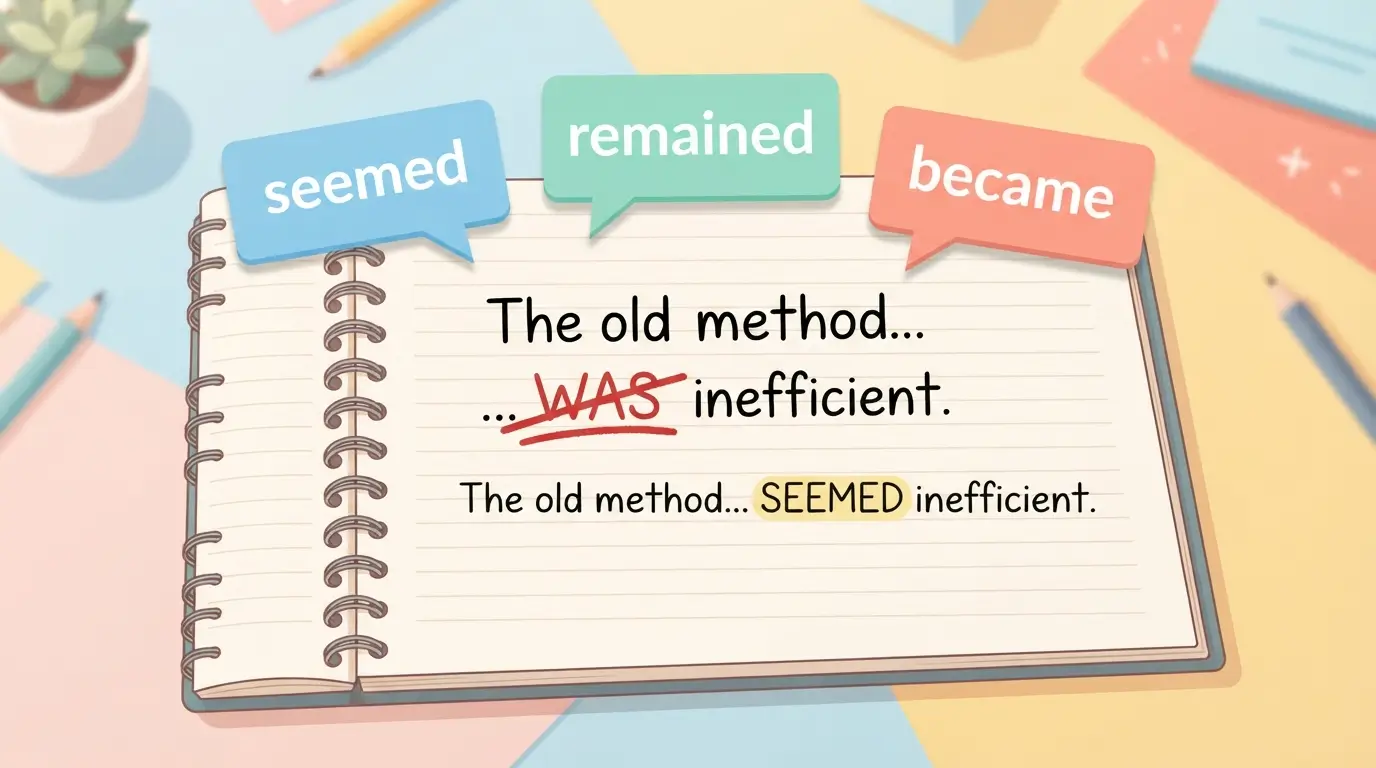
A synonym for was is any word showing a past state, like existed, remained, seemed, or became. These synonyms for was help you avoid repeating the same verb in essays, stories, or daily writing.
Picture a student writing a school essay. Every sentence starts with “was.” The teacher circles it in red ink five times. That moment shows why synonyms for was matter in everyday writing.
Think about a simple sentence like “The sky was blue.” You could also say “The sky appeared blue” or “The sky remained blue all day.” Small changes like this make writing sound fresh and natural.
Students get more mature essays. Bloggers keep readers interested. Writers boost SEO value. Daily speakers sound more confident.
“Words are the only things that last forever.” — Anonymous
Learning a few solid alternatives to was can change how people see your writing skill almost overnight.
“To write well is to think clearly, and clear thinking needs the right words.” — Anonymous
1. Existed
- Meaning: This word shows something was truly present or real.
- Examples: The old bridge existed for centuries. A shop existed on that corner.
2. Occurred
- Meaning: For when something took place at a certain time.
- Examples: The accident occurred late at night. A strange event occurred last summer.
3. Happened
- Meaning: Tells that an event took place before.
- Examples: It happened right before my eyes. Something odd happened at the party.
4. Remained
- Meaning: Something stayed the same without changing much.
- Examples: The room remained quiet all morning. Her smile remained warm and gentle.
5. Stood
- Meaning: For someone or something that was in one position.
- Examples: The old house stood near the river. He stood silent during the speech.
6. Sat
- Meaning: Shows a person or object was seated somewhere.
- Examples: The cat sat on the windowsill. She sat quietly through the meeting.
7. Lay
- Meaning: Describes something resting flat in one place before.
- Examples: The book lay open on the desk. Snow lay thick across the field.
8. Seemed
- Meaning: Describes how something appeared to be.
- Examples: The plan seemed perfect at first. He seemed tired after the trip.
9. Appeared
- Meaning: Shows how something looked or presented itself before.
- Examples: The sky appeared dark before the storm. She appeared confident in the interview.
10. Became
- Meaning: Shows a change into a new state.
- Examples: The sky became dark within minutes. He became famous after one movie.
11. Turned Into
- Meaning: For a clear change from one thing.
- Examples: The rain turned into a storm. Their fight turned into a friendship.
12. Proved to Be
- Meaning: Something was shown true through results.
- Examples: The plan proved to be useful. His advice proved to be correct.
13. Functioned As
- Meaning: Something worked or served a certain purpose.
- Examples: The old barn functioned as storage. She functioned as the team leader.
14. Served As
- Meaning: For when something acted in a specific role.
- Examples: The chair served as a table. He served as our guide today.
15. Acted As
- Meaning: Something or someone played a certain role.
- Examples: The manager acted as a mentor. The bridge acted as a shortcut.
16. Resulted In
- Meaning: Something led directly to an outcome.
- Examples: The mistake resulted in extra costs. Hard work resulted in a promotion.
17. Constituted
- Meaning: Formal word for something making up a whole.
- Examples: These rules constituted the main policy. Their votes constituted a clear majority.
18. Comprised
- Meaning: Something was made up of certain parts.
- Examples: The team comprised five young engineers. The book comprised ten chapters.
19. Represented
- Meaning: Something stood for or symbolized an idea.
- Examples: The flag represented national pride strongly. Her speech represented years of struggle.
20. Embodied
- Meaning: For someone fully showing a quality.
- Examples: The coach embodied patience and discipline. Her work embodied honesty and care.
21. Exemplified
- Meaning: Something was a perfect example of an idea.
- Examples: His actions exemplified true leadership. The essay exemplified clear writing.
22. Personified
- Meaning: For someone fully showing a trait.
- Examples: She personified grace under pressure. He personified kindness daily.
23. Signified
- Meaning: Something was a sign of something else.
- Examples: The dark clouds signified a storm. Her silence signified deep disappointment inside.
24. Denoted
- Meaning: Formal word for what something clearly meant.
- Examples: The red mark denoted an error. His tone denoted mild frustration clearly.
25. Indicated
- Meaning: For when something pointed toward a clear fact.
- Examples: The test results indicated good health. Her face indicated real surprise instantly.
26. Reflected
- Meaning: Something mirrored or matched a certain feeling.
- Examples: His essay reflected careful, thoughtful planning. The report reflected months of research.
27. Showed
- Meaning: Simple word for something making a fact clear.
- Examples: The chart showed steady monthly growth. Her actions showed genuine care always.
28. Demonstrated
- Meaning: For when something proved a skill or fact clearly.
- Examples: The video demonstrated proper cooking steps. His work demonstrated strong attention.
29. Exhibited
- Meaning: Something displayed a clear quality or trait.
- Examples: The child exhibited artistic talent. The patient exhibited signs of recovery.
30. Displayed
- Meaning: For when something was shown clearly to others.
- Examples: The store displayed new spring items. She displayed confidence in her talk.
31. Revealed
- Meaning: Something was made known or uncovered.
- Examples: The letter revealed a hidden secret. His face revealed deep, quiet worry.
32. Manifested
- Meaning: Formal word for something becoming visible.
- Examples: Her stress manifested as headaches. The illness manifested through mild symptoms.
33. Evidenced
- Meaning: For facts proving something true.
- Examples: Success was evidenced by rising sales. Growth was evidenced in test scores.
34. Marked
- Meaning: Something clearly showed an important moment.
- Examples: The event marked a new beginning. Her graduation marked years of effort.
35. Characterized
- Meaning: Something was known mainly by a trait.
- Examples: The era was characterized by rapid change. Her writing was characterized by short sentences.
36. Defined
- Meaning: For when something clearly shaped a certain outcome.
- Examples: His choices defined his entire career. That decade defined modern popular culture.
37. Distinguished
- Meaning: Something stood apart because of a quality.
- Examples: Her calm voice distinguished her instantly. The design distinguished the brand clearly.
38. Typified
- Meaning: Something was a perfect, typical example of something.
- Examples: His speech typified honest, simple leadership. The house typified classic countryside style.
39. Epitomized
- Meaning: For when something was the best example possible.
- Examples: Her courage epitomized true team spirit. The dish epitomized authentic home cooking.
40. Symbolized
- Meaning: Something stood for a deeper meaning.
- Examples: The dove symbolized peace and hope. The ring symbolized their lasting promise.
41. Illustrated
- Meaning: Something explained an idea through a clear example.
- Examples: The story illustrated the value of patience. His diagram illustrated the whole process.
42. Portrayed
- Meaning: For someone shown a certain way.
- Examples: The film portrayed him as heroic. Her essay portrayed a difficult childhood.
43. Depicted
- Meaning: Something showed or described a clear picture.
- Examples: The painting depicted a quiet countryside scene. The report depicted a struggling small town.
44. Expressed
- Meaning: Shows a feeling or idea clearly shared.
- Examples: Her letter expressed deep, honest gratitude. His tone expressed mild, quiet frustration.
45. Conveyed
- Meaning: For a message clearly passed on.
- Examples: The speech conveyed real hope forward. Her smile conveyed warmth and comfort.
46. Felt
- Meaning: Shows an emotional or physical state.
- Examples: The room felt cold and empty. He felt proud after the match.
47. Looked
- Meaning: Something appeared a certain way visually.
- Examples: The cake looked delicious and freshly baked. She looked tired after the long shift.
48. Sounded
- Meaning: For when something seemed true through tone or words.
- Examples: His excuse sounded weak and rushed. The plan sounded solid at first.
49. Turned Out
- Meaning: Shows the final result of a situation.
- Examples: The trip turned out surprisingly fun. The weather turned out better than expected.
50. Used to Be
- Meaning: Something existed in the past, but not now.
- Examples: This street used to be quiet. He used to be quite shy.
“The difference between the right word and the almost right word is the difference between lightning and a lightning bug.” — Anonymous
Synonyms for Was Used
Try applied, employed, or utilized for past roles. “The tool was used daily” becomes “applied daily.” Utilized suits formal writing; applied fits casual text.
Synonyms for Was Not
Try wasn’t or failed to be for negatives. “The test was not easy” becomes “failed to be easy,” fitting formal essays.
Synonyms for Was Found
Try was discovered, located, or uncovered for research or lost items. “The keys were found” becomes “discovered under the couch.”
Synonyms for Was Responsible For
Try handled, oversaw, or managed for past duties. “She was responsible for sales” becomes “She oversaw sales,” fitting resumes well.
Synonyms for Was a Result Of
Try stemmed from, came from, or caused by to explain a cause. “The delay was a result of weather” becomes “stemmed from bad weather.”
Another Word for Was in an Essay
For essays, try appeared, remained, or existed instead of was. These sound formal and keep academic writing fresh and less repetitive.
- Appeared – shows how something seemed
- Remained – shows something stayed unchanged
- Existed – shows something was truly real
Synonyms for Was in a Sentence
The right synonym depends on meaning. “The room was empty” can become “The room seemed empty” or “stood empty.”
- Seemed – shows an impression
- Became – shows a change
- Stood – shows a position
Was Synonym Formal
For formal writing, use constituted, comprised, or functioned as. These fit reports, essays, and professional documents well.
- Constituted – formal, used for wholes
- Comprised – formal, made of parts
- Functioned as – formal, describes a role
Another Word for He Was
Try he seemed, he appeared, or he remained. “He was quiet” becomes “He remained quiet throughout dinner.”
- He seemed – shows an impression
- He appeared – shows how he looked
- He remained – shows he stayed the same
Synonyms for Had Been
Use had existed, had remained, or had stood for events further in the past, like “The house had remained empty for years.”
- Had existed – shows past reality
- Had remained – shows staying unchanged
- Had stood – shows a lasting position
Was Meaning and Example
Was shows a past state or condition. Example: “She was happy yesterday” means her happiness existed then, not necessarily now.
- Meaning – shows a past state
- Example – she was happy yesterday
- Use – describes people, places, things
Used to Be Synonym
Try formerly was, once was, or previously was, as in “This was formerly a quiet farm.”
- Formerly was – shows earlier state
- Once was – shows past condition
- Previously was – shows a change
Wad Synonym
Some searches for wad synonym actually mean was synonym. A wad means a small tight bundle, so try lump, bundle, or roll instead.
- Lump – a small compact mass
- Bundle – items wrapped or grouped together
- Roll – something tightly wound up
Comparison Table
| Keyword | Meaning | Usage Type | Context |
| Another word for was in an essay | Formal replacement for was in essays | Formal | Academic writing |
| Synonyms for was in a sentence | General replacements based on context | Neutral | Daily use |
| Was synonym formal | Structured, professional alternatives | Formal | Workplace, reports |
| Another word for he was | Alternatives describing a male subject | Casual/Neutral | Storytelling |
| Synonyms for had been | Alternatives for past perfect tense | Formal | Essays, narratives |
| Was meaning and example | Explains meaning with a sample sentence | Neutral | Learning, teaching |
| Used to be synonym | Alternatives for past habitual states | Casual | Daily conversation |
| Wad synonym | Alternatives for a bundle or lump | Casual | Daily use |
Frequently Asked Questions
How to replace the word was?
Start by focusing on the sentence’s meaning. When discussing existence, try words like “existed” or “remained.” For change, “became” or “turned into” may work better. Descriptions often sound more natural with words such as “seemed” or “appeared.” For example, “The movie was boring” can become “The movie seemed boring.” Reading your sentence aloud can help you choose the most natural replacement.
What’s another word for it was?
Common choices include it seemed, it appeared, or it turned out to be. “It was raining” becomes “It seemed to be raining.” These phrases suit casual conversation and storytelling well. Choosing the right one depends on whether you want certainty, impression, or surprise.
How to replace “there was”?
Try there existed, there remained, or there appeared to be. “There was a storm” becomes “There appeared to be a storm coming.” These alternatives work well in creative writing, since there was can sound weak or repeated. Stronger verbs make sentences more descriptive.
What is the verb for was?
Was is itself a verb, the past tense form of be. It shows a state or condition that happened before now. “Be” becomes “was” in past tense, as in “I was tired.” Other forms of be include am, is, are, and were, depending on subject and tense.
Conclusion
Learning synonyms for was does more than improve grammar. It shapes how confident and interesting your writing sounds. Whether you write essays, blog posts, or quick emails, strong word choices help your ideas land better and keep people reading.
“Language is the dress of thought.” Anonymous
Try using these words in small places first. Replace was in one sentence of your next email or essay paragraph. Notice how the writing instantly feels more polished. Over time, these small changes build a stronger writing habit.
Content writers, students, and daily English speakers all benefit from this practice. SEO content also improves naturally, since search engines reward writing that feels varied and easy to read.
“Practice isn’t the thing you do once you’re good. It’s the thing you do that makes you good.” Anonymous
Keep this list nearby, revisit it often, and watch your writing grow stronger with every sentence you write.

Ethan Brooks is a content creator at Synulo.com who shares practical insights on technology, productivity tools, and the latest digital trends.