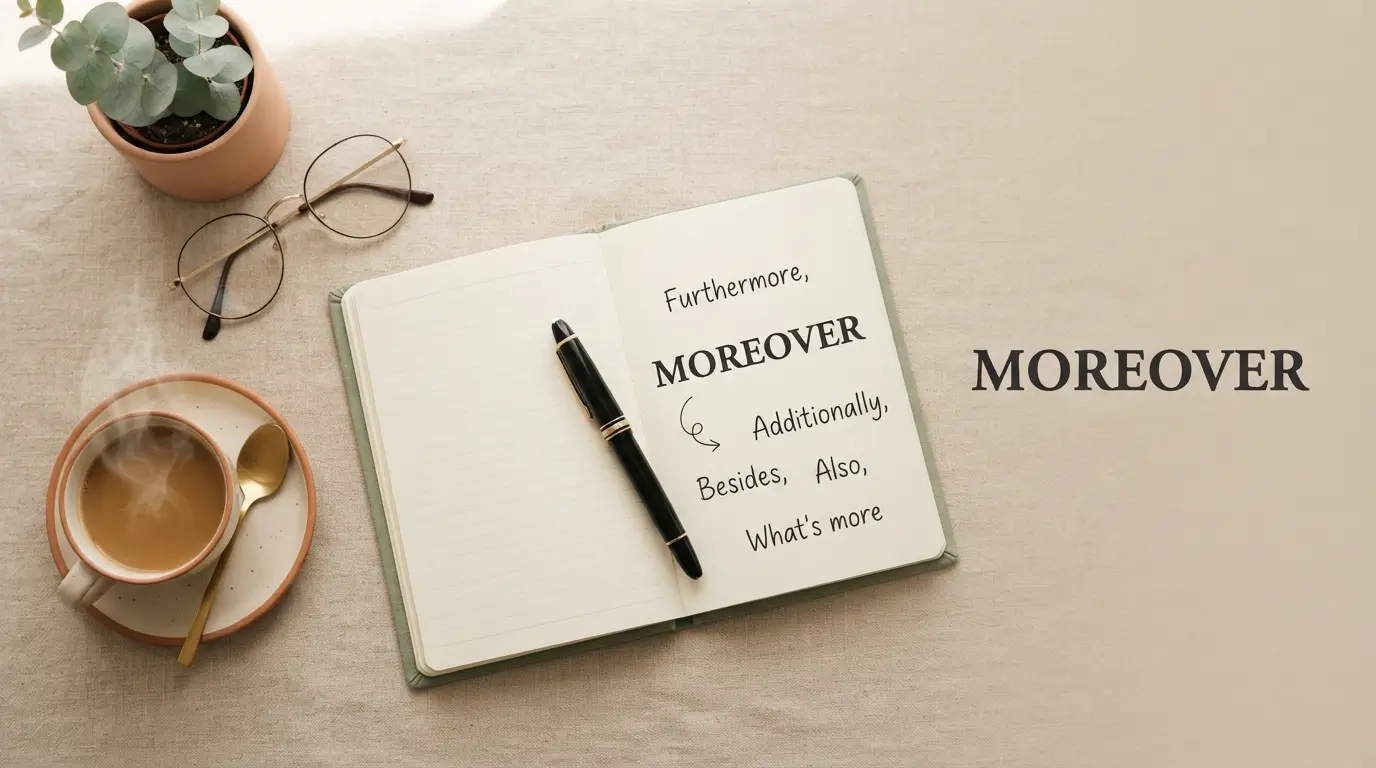
A synonym for “moreover” is any word that adds new information to a point you already made. Simple options include furthermore, additionally, besides, also, and what’s more. These words help your writing flow better and sound less repetitive when adding one more fact or idea.
Picture this: you are writing an email to your boss. You already gave one strong reason. Now you want to add a second one. You type “moreover” for the third time this week. It feels stiff and tired. You pause and wonder if a better word is waiting for you.
This happens to students, bloggers, and busy professionals daily. A student needs fresh words for a strong essay. A blogger needs variety so posts do not sound robotic. A writer needs range to keep readers interested. A daily English speaker just wants to sound natural.
“The difference between the almost right word and the right word is a large matter.”
Small word choices shape how people read your tone.
“Words are, of course, the most powerful drug used by persons.”
That is exactly why this list exists.
50 Synonyms for Moreover
1. Furthermore
- Meaning: A formal word used to add one more strong point.
- Examples: Furthermore, the report had many errors. Furthermore, she never called back.
2. Additionally
- Meaning: A simple word that means you are adding one fact.
- Examples: Additionally, he cleaned the floor too. Additionally, the hotel offers free breakfast.
3. In addition
- Meaning: A common phrase used before sharing extra information.
- Examples: In addition, she works part time. In addition, the car saves fuel.
4. Besides
- Meaning: A casual word that adds a fact or a reason.
- Examples: Besides, I forgot my warm coat. Besides, he works very hard daily.
5. Also
- Meaning: A short word used often in everyday speech and writing.
- Examples: She also likes strong black coffee. The shop also sells leather bags.
6. What’s more
- Meaning: A friendly phrase used to add something surprising or strong.
- Examples: What’s more, the trip was fun. What’s more, he is always honest.
7. On top of that
- Meaning: A casual phrase for adding one more problem or benefit.
- Examples: On top of that, it rained hard. On top of that, she lost her keys.
8. Plus
- Meaning: A quick, informal word used to add a small extra point.
- Examples: Plus, the rent here is high. Plus, he cooks really well too.
9. Further
- Meaning: A formal word that leads into another related idea.
- Examples: Further, sales grew fast that month. Further, customer demand went up.
10. Likewise
- Meaning: A word that shows something similar happens in another case.
- Examples: Likewise, her sister trains hard daily. Likewise, the mall closed early too.
11. Similarly
- Meaning: A word used when two things happen in the same way.
- Examples: Similarly, his brother studies late nights. Similarly, July sales stayed very strong.
12. Not only that
- Meaning: A phrase used to show one more surprising added detail.
- Examples: Not only that, it was cheap. Not only that, he scored very high.
13. As well
- Meaning: A short phrase added at the end to add facts.
- Examples: She dances well as well. He washed the whole car as well.
14. Too
- Meaning: A very short word placed at the end to add.
- Examples: I love warm pasta too. She studies hard every night too.
15. Along with this
- Meaning: A phrase used to connect one added fact with another.
- Examples: Along with this, he got praise. Along with this, the park stayed clean.
16. Coupled with this
- Meaning: A slightly formal phrase that links two related points together.
- Examples: Coupled with this, wages stayed flat. Coupled with this, strong winds arrived fast.
17. In the same vein
- Meaning: A phrase showing your next point matches the first tone.
- Examples: In the same vein, she liked the colors. In the same vein, he loved the music.
18. Correspondingly
- Meaning: A formal word showing one change matches another change closely.
- Examples: Correspondingly, prices went up too fast. Correspondingly, results improved as well.
19. Equally important
- Meaning: A phrase used to show your next point matters just as much.
- Examples: Equally important, track your daily spending. Equally important, eat a good meal.
20. By the same token
- Meaning: A phrase used to add a point that follows the same logic.
- Examples: By the same token, he expects trust. By the same token, she respects fairness.
21. To add to this
- Meaning: A simple phrase used before sharing one more small detail.
- Examples: To add to this, it needs paint. To add to this, he felt hungry too.
22. Notably
- Meaning: A word used to highlight one added point worth noticing.
- Examples: Notably, online orders doubled last month. Notably, defense got much stronger overall.
23. Significantly
- Meaning: A word showing your added point carries real, strong weight.
- Examples: Significantly, profits rose this whole quarter. Significantly, accidents fell as well.
24. Importantly
- Meaning: A word used to stress that the next fact truly matters.
- Examples: Importantly, he changed his behavior after. Importantly, she checked her work twice.
25. More than that
- Meaning: A phrase used to show your next point is even bigger.
- Examples: More than that, he works hard daily. More than that, she truly listens well.
26. Over and above
- Meaning: A formal phrase meaning something extra beyond what was said.
- Examples: Over and above, he left a tip. Over and above, she helped others too.
27. In addition to this
- Meaning: A longer version of “also” used in formal writing.
- Examples: In addition to this, it saves money. In addition to this, staff are fast.
28. Alongside this
- Meaning: A phrase showing two facts or actions happen together.
- Examples: Alongside this, customer trust grew too. Alongside this, he ate healthy meals daily.
29. What is more
- Meaning: The formal version of “what’s more,” used in essays.
- Examples: What is more, it is affordable. What is more, the book stays powerful.
30. Not to mention
- Meaning: A casual phrase used to add a fact almost as an afterthought.
- Examples: Not to mention, the food was great. Not to mention, he stays humble too.
31. Above and beyond
- Meaning: A phrase meaning someone did far more than expected.
- Examples: Above and beyond, she helped teammates too. Above and beyond, he checked every detail.
32. In light of this
- Meaning: A phrase used to add a point based on new facts.
- Examples: In light of this, we changed budgets. In light of this, we moved the event.
33. To top it off
- Meaning: A casual phrase used to add one final surprising detail.
- Examples: To top it off, the flight got delayed. To top it off, dessert was free.
34. Aside from this
- Meaning: A phrase used to introduce one more point beyond the first.
- Examples: Aside from this, it is very clean. Aside from this, he explains things clearly.
35. Beyond that
- Meaning: A short phrase used to introduce a further, related point.
- Examples: Beyond that, she studied Spanish too. Beyond that, he painted the whole wall.
36. On a related note
- Meaning: A phrase used to connect your next idea to the last.
- Examples: On a related note, morale improved too. On a related note, the soil improved.
37. In tandem with this
- Meaning: A phrase showing two things happen together in a connected way.
- Examples: In tandem with this, sales began rising. In tandem with this, his grades improved.
38. Adding to this
- Meaning: A simple phrase used right before sharing another useful fact.
- Examples: Adding to this, it is very simple. Adding to this, she stays organized too.
39. Together with this
- Meaning: A phrase joining one fact with another closely related fact.
- Examples: Together with this, he cut small expenses. Together with this, the team rested well.
40. As a further point
- Meaning: A formal phrase used in essays before adding one argument.
- Examples: As a further point, it lowers cost. As a further point, the design stays durable.
41. Building on this
- Meaning: A phrase showing your next idea grows from the last.
- Examples: Building on this, we expanded our team. Building on this, she tried harder tasks.
42. Extending this point
- Meaning: A phrase used to stretch an idea further with more detail.
- Examples: Extending this point, it saves energy too. Extending this point, morale rose fast.
43. In continuation
- Meaning: A formal phrase showing your sentence follows the same idea.
- Examples: In continuation, the data was accurate too. In continuation, his tone stayed calm.
44. To further this point
- Meaning: A phrase used in essays to strengthen an argument further.
- Examples: To further this point, sales doubled fast. To further this point, costs stayed low.
45. It’s also worth adding
- Meaning: A friendly phrase used to share one more helpful detail.
- Examples: It’s also worth adding, staff stay kind. It’s also worth adding, the course is affordable.
46. In similar fashion
- Meaning: A phrase showing your next point follows a matching pattern.
- Examples: In similar fashion, he eats clean daily. In similar fashion, summer numbers grew fast.
47. And another thing
- Meaning: A very casual phrase used in speech to add a point.
- Examples: And another thing, the seats were tiny. And another thing, he arrived very late.
48. As if that weren’t enough
- Meaning: A dramatic phrase used to add a surprising extra detail.
- Examples: As if that weren’t enough, it started raining. As if that weren’t enough, her phone died.
49. On top of everything
- Meaning: A casual phrase used when many small problems pile up.
- Examples: On top of everything, the internet crashed too. On top of everything, he got sick.
50. Last but not least
- Meaning: A phrase used to add a final point that still matters.
- Examples: Last but not least, she thanked her family. Last but not least, he shared his goal.
“Language is the dress of thought, and every time you speak, your mind is on parade.”
Synonyms for Moreover in an Essay
Academic essays need clear, formal transitions between paragraphs. Words like furthermore, in addition, and what is more work best since they sound polished and precise. Repeating one word weakens your argument’s flow. Mix in formal choices like additionally to keep your essay smooth and easy for a teacher to follow.
Synonyms for Moreover in French
Writing in French, common equivalents include de plus, en outre, and par ailleurs. These phrases work like “moreover,” adding extra information smoothly. De plus is common in everyday French, while en outre feels more formal. Learners preparing for French exams should practice all three often.
Moreover Synonyms for IELTS
IELTS examiners reward candidates who use a range of linking words correctly. Strong choices include furthermore, in addition, and what is more, especially in Writing Task 2. Avoid repeating “moreover” throughout your essay, since this lowers your lexical score. Practice swapping in additionally for real vocabulary range.
What Can I Say Instead of Moreover
If “moreover” feels overused, try also, besides, plus, or on top of that for a lighter tone. For formal writing, furthermore or in addition work well. The best choice depends on your audience. Casual chats welcome relaxed words, while reports and essays call for polished alternatives.
Real People Also Ask
What is a synonym for moreover in academic writing?
In academic writing, the strongest synonyms are furthermore, in addition, and what is more. These words sound formal and precise, fitting research papers and reports well. Avoid casual options like “plus” in academic contexts, since they feel too relaxed. Stick to formal transitions to keep your writing professional and clear for teachers or reviewers.
How do you say “furthermore” professionally?
Professionally, say additionally, in addition, or as a further point instead of “furthermore.” These options sound polished without feeling stiff. Business emails and reports benefit from this kind of confident language. Choosing the right word shows attention to detail and helps your message sound organized and credible to colleagues or clients.
What’s a better way to say “furthermore”?
A better, fresher way depends on your writing style. Try what is more, building on this, or to add to this for variety. These phrases keep writing natural instead of repetitive. Mixing several options throughout a document helps readers stay engaged, since repeated words can make even strong ideas feel flat or tired.
How do you say “furthermore” casually?
Casually, say plus, on top of that, also, or besides instead of “furthermore.” These words fit chats, texts, and relaxed conversations perfectly. They sound natural when talking with friends or coworkers. Save the formal options for essays and reports, and let these casual choices carry your everyday conversations comfortably.
Moreover Synonym Academic Writing
Academic writing demands precision, so transition words matter as much as your arguments. Furthermore and in addition remain the safest, most trusted choices for essays and journal articles.
- Use furthermore to open a new paragraph smoothly
- Choose in addition for supporting evidence
- Avoid casual words like “plus” in formal papers
Synonyms for Moreover and Furthermore
“Moreover” and “furthermore” are close cousins, both adding strong, related points. Good alternatives for either include additionally, what is more, and on top of that.
- Swap between formal and casual options by context
- Use additionally for a safe, neutral middle ground
- Try what is more for slightly more emphasis
Synonyms for Moreover in English
English offers many natural alternatives to “moreover,” from formal to casual. Popular choices include also, besides, furthermore, and what’s more.
- Use also for simple, everyday writing
- Choose besides for a slightly casual tone
- Pick furthermore for formal reports and essays
Moreover Synonym Legal
Legal writing favors precise, formal transitions over casual alternatives. Common legal-style synonyms include furthermore, in addition thereto, and additionally.
- Use furthermore for formal legal arguments
- Choose additionally when listing supporting clauses
- Avoid casual phrases in official legal documents
Moreover Antonyms
Antonyms for “moreover” show contrast instead of addition. Useful options include however, nevertheless, but, and on the other hand.
- Use however to introduce contrasting ideas
- Choose nevertheless for a more formal contrast
- Try but for quick, casual contrast in speech
Moreover Synonym Informal
Informal writing calls for relaxed, friendly alternatives to “moreover.” Great casual options include plus, also, besides, and on top of that.
- Use plus for quick, casual additions
- Choose also for simple everyday speech
- Try besides when adding a light reason
Moreover Example
Seeing “moreover” used correctly helps you understand its placement. For example: “The house has a great location. Moreover, it comes with a beautiful garden.”
- Place it at the start of a new sentence
- Follow it with a comma before your point
- Use it to strengthen, not contradict, your idea
Transition Words Like Moreover
Many transition words function like “moreover” by adding information smoothly. Related options include additionally, furthermore, also, and besides.
- Group similar transitions together while studying
- Practice using each one in short sentences
- Rotate between them to avoid sounding repetitive
| Keyword | Meaning | Usage Type | Context |
| Academic writing synonym | Formal essay connectors | Formal | Academic writing |
| Moreover and furthermore | Replaces both connectors | Formal/Neutral | Essays, reports |
| In English | General alternatives | Formal/Casual | Daily use |
| Legal synonym | Precise legal connectors | Formal | Contracts, briefs |
| Antonyms | Contrast words | Formal/Casual | Debates |
| Informal synonym | Relaxed connectors | Casual | Texts, chats |
| Example | Sample correct usage | Neutral | Learning English |
| Transition words | Broader connector group | Formal/Casual | Essays, speech |
Conclusion
Learning synonyms for moreover does more than fill space in a sentence. It sharpens your writing, strengthens your speaking, and helps every email, essay, or blog post feel fresh instead of repetitive. Strong word choices build trust with readers, whether you are a student, blogger, content writer, or someone chatting in English daily.
Try picking three or four favorites from this list. Use them this week in a real email, essay, or conversation. Small practice like this builds lasting habits, and soon these words will feel natural instead of forced. Growth in vocabulary is a slow, steady process worth the effort.
“To limit the press is to insult a nation; to prohibit reading of certain books is to declare the inhabitants to be either fools or slaves.”
Writing well is a skill anyone can grow with steady practice.
“The limits of my language mean the limits of my world.”
Expand your words, and you expand how clearly you share every idea you have.

Ethan Brooks is a content creator at Synulo.com who shares practical insights on technology, productivity tools, and the latest digital trends.