
Some common synonyms for home include house, residence, abode, dwelling, shelter, haven, and homestead. The best choice depends on your meaning and tone. Words like residence sound formal, while haven feels warm and emotional. These alternatives can make your speaking and writing clearer, richer, and more natural.
Imagine coming back after a long day. You open the door, drop your bag, and feel calm again. That simple place may be a small apartment, a family house, or a quiet room. The word home can carry many feelings, so using the right alternative can help you say exactly what you mean.
For example, a student may call a family house a residence in formal writing but use place in a casual chat.
Students can use these words to make essays stronger. Bloggers can avoid using the same word again and again. Content writers can choose words that match the mood. Daily English users can sound more natural and precise.
Learning synonyms is also useful when you want to describe comfort, family, safety, or belonging without repeating one word.
“A familiar place can make an ordinary day feel special.”
Words also change the feeling of a sentence. Haven sounds peaceful, while residence sounds formal. This small difference can make your writing much better.
“The right word helps a simple thought find its best shape.”
1. House
- Meaning: A building where people live, sleep, eat, and spend time.
- Examples: My house is near school. We cleaned the house together.
2. Residence
- Meaning: A place where someone lives, often used in formal English.
- Examples: Her residence is downtown. Please enter your current residence here.
3. Abode
- Meaning: A place where someone lives, usually with a warm literary feeling.
- Examples: They returned to their quiet abode. His abode overlooks the river.
4. Dwelling
- Meaning: A building or place where people live and stay.
- Examples: The family found a new dwelling. This dwelling has three bedrooms.
5. Domicile
- Meaning: The official place where a person lives or legally belongs.
- Examples: His domicile is listed here. She changed her legal domicile recently.
6. Household
- Meaning: A home and the people who live together there.
- Examples: Our household is very busy. Everyone helps around the household.
7. Homestead
- Meaning: A family home and the land or property around it.
- Examples: Their homestead sits beside a lake. The old homestead needs repairs.
8. Hearth
- Meaning: The area around a fireplace, often representing family and home.
- Examples: They gathered around the hearth. The hearth made the room feel warm.
9. Haven
- Meaning: A safe and peaceful place where someone feels protected.
- Examples: Her room became a quiet haven. The garden is my little haven.
10. Shelter
- Meaning: A safe place that protects people from weather or danger.
- Examples: They found shelter before the storm. The building provided temporary shelter.
11. Lodging
- Meaning: A place where someone stays, especially for a short time.
- Examples: We found cheap lodging nearby. Their lodging was clean and comfortable.
12. Quarters
- Meaning: Rooms or living spaces used by a person or group.
- Examples: The workers shared small quarters. Our living quarters are upstairs.
13. Habitation
- Meaning: A place designed or used for people to live.
- Examples: The cabin became their habitation. Few people live in this habitation.
14. Place
- Meaning: A general word for somewhere that feels like your home.
- Examples: Come over to my place. I finally found my own place.
15. Property
- Meaning: A building or land owned or used by someone.
- Examples: Their property has a large garden. We visited the property yesterday.
16. Cottage
- Meaning: A small, simple house, often found in the countryside.
- Examples: They bought a little cottage. The cottage looks lovely in winter.
17. Bungalow
- Meaning: A house, usually with one main living floor.
- Examples: My grandparents live in a bungalow. The bungalow has a wide porch.
18. Villa
- Meaning: A large, comfortable house, often linked with pleasant surroundings.
- Examples: They rented a seaside villa. The villa has beautiful gardens.
19. Mansion
- Meaning: A very large and impressive private house.
- Examples: The mansion stood on a hill. We saw the old mansion downtown.
20. Apartment
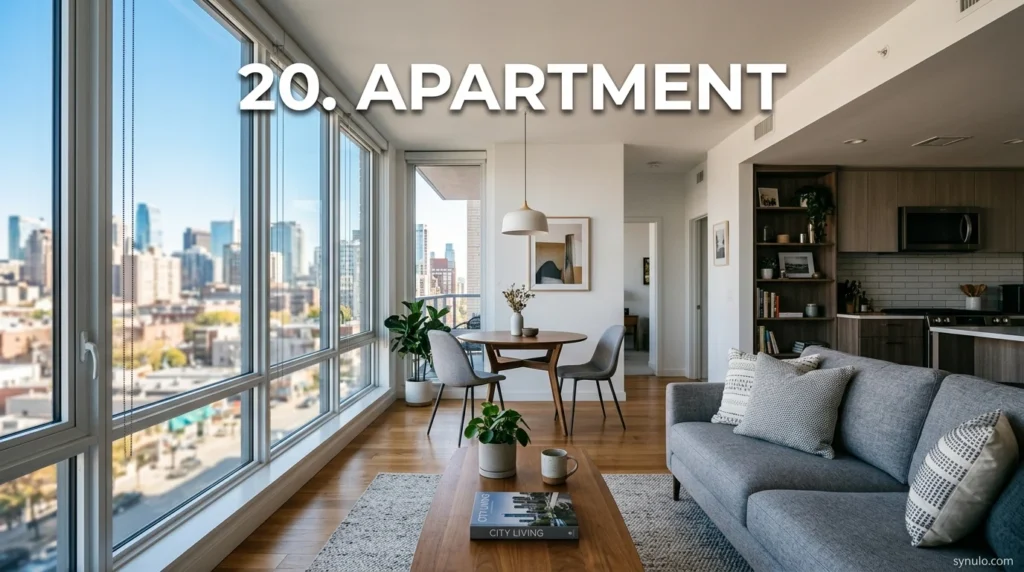
- Meaning: A set of rooms where someone lives inside a larger building.
- Examples: She rents an apartment nearby. My apartment has two bedrooms.
21. Flat
- Meaning: A British English word for an apartment or living space.
- Examples: He lives in a small flat. Their flat is near the station.
22. Condo
- Meaning: An apartment that someone owns rather than rents.
- Examples: They bought a condo downtown. Her condo has a sunny balcony.
23. Townhouse
- Meaning: A house joined to other houses in a row.
- Examples: We live in a townhouse. Their townhouse has a tiny garden.
24. Cabin
- Meaning: A small house, often made of wood and found outdoors.
- Examples: We stayed in a mountain cabin. The cabin felt warm and cozy.
25. Hut
- Meaning: A small, simple building used as a basic living place.
- Examples: The family lived in a small hut. The hut stood beside the field.
26. Den
- Meaning: A comfortable private room or a cozy living space.
- Examples: Dad reads in his den. The den is my favorite room.
27. Nest
- Meaning: A cozy home, often used as a warm figurative expression.
- Examples: They built a happy nest. Her apartment became their little nest.
28. Sanctuary
- Meaning: A peaceful place where someone feels safe, calm, and protected.
- Examples: Her bedroom is a sanctuary. The home became a peaceful sanctuary.
29. Refuge
- Meaning: A safe place where someone can escape trouble or danger.
- Examples: The house became their refuge. They needed a quiet refuge.
30. Retreat
- Meaning: A quiet place where someone can rest away from daily stress.
- Examples: Their cabin is a retreat. I use home as my retreat.
31. Base
- Meaning: A place where someone lives or regularly returns to.
- Examples: London is their home base. The team returned to base.
32. Homeplace
- Meaning: A family home or place strongly connected with your roots.
- Examples: They visited their old homeplace. That farm remains our homeplace.
33. Family home
- Meaning: A home shared by family members or linked to family life.
- Examples: We grew up there. The family home holds many memories.
34. Living quarters
- Meaning: Rooms or spaces used for sleeping, living, and daily activities.
- Examples: The living quarters are upstairs. Their living quarters were quite small.
35. Place of residence
- Meaning: A formal phrase meaning the location where someone currently lives.
- Examples: Enter your place of residence. His place of residence changed recently.
36. Private residence
- Meaning: A home used mainly by an individual or family.
- Examples: This is a private residence. Visitors cannot enter the private residence.
37. Family dwelling
- Meaning: A home where a family lives together.
- Examples: They built a family dwelling. The family dwelling overlooks the fields.
38. Native place
- Meaning: The place where someone was born or grew up.
- Examples: She returned to her native place. His native place is a small village.
39. Hometown
- Meaning: The town or city where someone grew up or feels rooted.
- Examples: I visit my hometown yearly. Her hometown is near the coast.
40. Homeland
- Meaning: The country or region that someone feels deeply connected to.
- Examples: He returned to his homeland. They spoke proudly about their homeland.
41. Home country
- Meaning: The country that a person considers their own.
- Examples: She misses her home country. He plans to visit his home country.
42. Birthplace
- Meaning: The place where someone was born.
- Examples: Lahore is his birthplace. She often talks about her birthplace.
43. Native land
- Meaning: The country or region where someone was born or raised.
- Examples: He returned to his native land. She feels connected to her native land.
44. Motherland
- Meaning: A traditional word for the country someone feels belongs to them.
- Examples: The poem praises his motherland. She dreamed of seeing her motherland.
45. Fatherland
- Meaning: An older term for a person’s homeland or native country.
- Examples: The book mentions his fatherland. He wrote about returning to his fatherland.
46. Dwelling place
- Meaning: A general or literary term for a place where someone lives.
- Examples: The forest became their dwelling place. They found a peaceful dwelling place.
47. Habitation place
- Meaning: A place where people live, especially in formal or academic writing.
- Examples: The area supported human habitation. Researchers studied ancient habitation places.
48. Family abode
- Meaning: A home belonging to or shared by a family.
- Examples: They returned to their family abode. The family abode was beautifully decorated.
49. Comfortable quarters
- Meaning: A pleasant living space that gives someone comfort and ease.
- Examples: We found comfortable quarters nearby. The guests enjoyed their comfortable quarters.
50. Safe place
- Meaning: A place where someone feels protected, relaxed, and free from fear.
- Examples: Home is my safe place. Everyone deserves a safe place.
“A good synonym does more than replace a word; it can change its feeling.”
synonyms for home run
The phrase home run has a different meaning from the word home by itself. In baseball, alternatives include four-bagger, homer, or round-tripper. In everyday writing, “home run” can also mean a big success. For example, “The new campaign was a huge success” can replace “The campaign was a home run” when you want clearer language.
synonyms for home base
Home base can mean a place where someone returns or feels established. Depending on context, useful alternatives include base, headquarters, main location, starting point, or home station. In sports, home base may have a specific meaning, so the best synonym depends on the sentence. In casual speech, “base” is often the simplest choice.
synonyms for home in hindi
Common Hindi words related to home include घर (ghar), गृह (grih), आवास (aavaas), and निवास (nivaas). “घर” is the everyday choice, while “निवास” and “आवास” can sound more formal. Choosing the right Hindi word depends on whether you mean a family home, a residence, or simply a place where someone lives.
synonyms for home decor
If you need alternatives for home decor, useful phrases include interior decoration, interior design, home styling, house decoration, and interior furnishings. These terms are not exact replacements in every situation. “Interior design” can describe a broader professional field, while “home styling” often focuses on the visual look of rooms, furniture, colors, and decorative items.
synonyms for home or house
Home and house are close, but they are not always interchangeable. A house usually means the physical building, while home often includes feelings of comfort, family, and belonging. Other choices include residence, dwelling, abode, property, and place. Use “house” for the building and “home” when the emotional meaning matters.
People Also Ask: What are fancy words for home?
Fancy or formal words for home include residence, domicile, abode, dwelling, habitation, and homestead. “Residence” works well in professional writing, while “domicile” is common in legal or official contexts. “Abode” has a literary feel. “Homestead” often suggests a family property. The best fancy word depends on the tone and exact meaning of your sentence.
People Also Ask: What are some poetic synonyms for home?
Poetic alternatives for home include hearth, haven, sanctuary, nest, refuge, retreat, and abode. These words can create stronger emotions than the basic word “home.” For example, “haven” suggests safety, “hearth” suggests family warmth, and “nest” suggests comfort. Writers often choose these words when describing memories, belonging, peace, or deep emotional connection.
People Also Ask: What is another name for your home?
Another name for your home can be house, residence, abode, dwelling, place, property, apartment, flat, or domicile. The correct choice depends on the type of home and the situation. “House” is common in everyday speech, “residence” sounds more formal, and “abode” sounds literary. “Place” is also very natural in casual English.
People Also Ask: What is an old word for home?
An old or traditional word for home is hearth. In older English, the hearth was strongly connected with the family and household because it was the center of warmth, cooking, and daily life. Other traditional choices include abode, dwelling, homestead, and habitation. These words are still understood today, but some sound more literary or formal than “home.”
Conclusion
Learning synonyms for home gives you more ways to express simple ideas. Instead of using “home” in every sentence, you can choose a word that matches your exact meaning. Residence works well in formal writing. Haven adds a feeling of safety. Hearth can suggest family warmth. Homestead can connect a place with land and family history.
These words can improve many types of communication. Students can use them in essays and school assignments. Bloggers can create smoother articles without repeating the same word. Content writers can choose language that fits their audience. English learners can also build stronger vocabulary for everyday conversations.
The key is not to use difficult words just to sound smart. Choose the word that feels natural and clear. Try writing one sentence with “home,” then rewrite it with a different synonym. Notice how the feeling changes.
Practice these words in emails, essays, blog posts, stories, captions, and daily conversations. Over time, choosing the right word will become easier.
“Better vocabulary gives your ideas more room to grow.”
You do not need to memorize all 50 words at once. Start with five useful ones, such as residence, abode, haven, dwelling, and sanctuary. Learn their meanings, write your own examples, and use them naturally.
“Small vocabulary choices can make a big difference in clear communication.”

Daniel Parker is a tech researcher and contributor at Synulo.com, providing easy-to-understand guides on software, AI tools, and online resources.