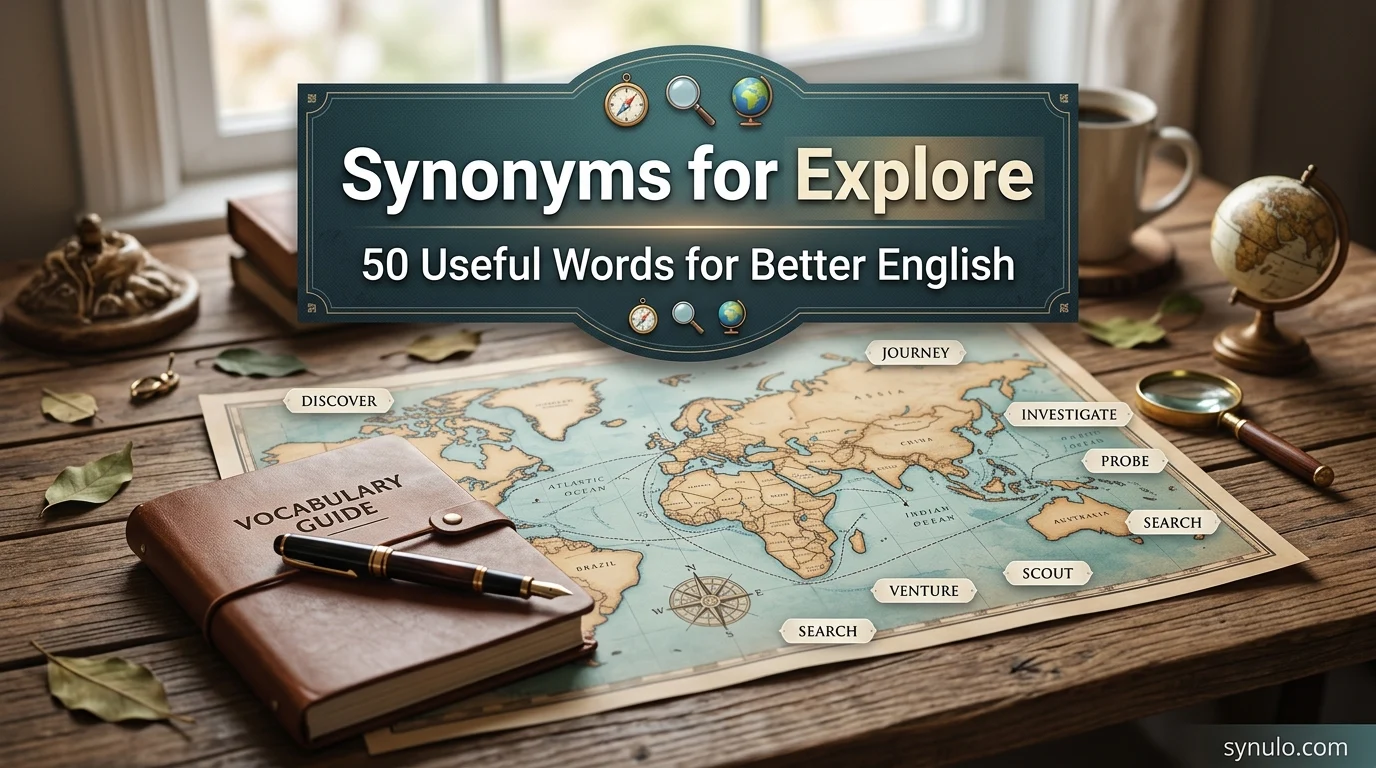
Some useful synonyms for explore include investigate, examine, study, research, discover, inspect, investigate, survey, and discover. The best choice depends on context. These words can describe studying an idea, searching for information, visiting a place, or learning something new through experience.
Mia opens a map before a weekend trip. She circles a small town, checks its streets, and wonders what she might find there. Later, she walks through its old market and learns about its history. One simple word describes much of what she does: explore.
But English gives us many ways to express the same idea. A student may investigate a topic. A traveler may wander through a new city. A writer may examine an idea. Choosing the right word makes your sentence clearer and more natural.
“Every new word gives your ideas another path to follow.”
Learning synonyms is not about using difficult words. It is about choosing the word that fits your exact meaning.
“Good English is not about bigger words; it is about better choices.”
Below are 50 useful alternatives, with simple meanings and examples.
1. Investigate
- Meaning: Try to find facts by looking closely at a problem or subject.
- Examples: We investigated the strange noise outside. She investigated the problem before deciding.
2. Examine
- Meaning: Look at something carefully so you can understand it better.
- Examples: The doctor examined the report carefully. Please examine these notes before class.
3. Study
- Meaning: Look closely at a subject to learn more about it.
- Examples: We studied the old map together. He studied the results after lunch.
4. Research
- Meaning: Collect facts and information to learn more about a topic.
- Examples: She researched the city before traveling. I researched the topic for school.
5. Inspect
- Meaning: Check something closely to find details, errors, or possible problems.
- Examples: The worker inspected the broken door. Dad inspected the bike before riding.
6. Survey
- Meaning: Look over an area or subject carefully to understand it.
- Examples: We surveyed the area before building. They surveyed the market for ideas.
7. Probe
- Meaning: Search deeply or ask questions to find hidden facts.
- Examples: Reporters probed the issue for answers. The team probed the cause carefully.
8. Analyze
- Meaning: Study different parts to understand how something works or connects.
- Examples: We analyzed the results in class. She analyzed the story for meaning.
9. Review
- Meaning: Look at something again to understand, check, or improve it.
- Examples: I reviewed the lesson before dinner. She reviewed the plan with us.
10. Assess
- Meaning: Judge something carefully after looking at its important details.
- Examples: Teachers assess student work fairly. We assessed the risks before leaving.
11. Observe
- Meaning: Watch something carefully so you can learn what happens.
- Examples: We observed birds near the lake. She observed the class quietly today.
12. Consider
- Meaning: Think carefully about an idea, choice, or possible action.
- Examples: We considered several travel plans. He considered the offer before answering.
13. Discover
- Meaning: Find something new, useful, interesting, or surprising for the first time.
- Examples: She discovered a quiet beach nearby. I discovered a new study trick.
14. Uncover
- Meaning: Find facts or information that were previously hidden or unknown.
- Examples: The search uncovered useful clues. They uncovered errors in the report.
15. Seek
- Meaning: Try to find something useful, important, needed, or wanted.
- Examples: We seek answers through careful study. She sought advice from her teacher.
16. Search
- Meaning: Look carefully for something that may be difficult to find.
- Examples: I searched the room for keys. They searched online for travel ideas.
17. Delve
- Meaning: Study a subject deeply because you want to understand it.
- Examples: She delved into local history. We delved into the report together.
18. Look into
- Meaning: Try to learn facts about a problem, subject, or situation.
- Examples: I will look into the issue. She looked into cheaper travel options.
19. Inquire into
- Meaning: Ask questions or investigate something to learn more about it.
- Examples: Officials inquired into the complaint. We inquired into the strange event.
20. Pursue

- Meaning: Follow an idea, interest, goal, or subject with steady effort.
- Examples: He pursued his interest in science. She pursued new ways to learn.
21. Scout
- Meaning: Look around an area to find useful places, choices, or opportunities.
- Examples: We scouted the area for campsites. They scouted several locations before choosing.
22. Tour
- Meaning: Visit different parts of a place to see and learn.
- Examples: We toured the old castle yesterday. They toured the campus with friends.
23. Roam
- Meaning: Move around freely while looking at different places and things.
- Examples: We roamed through the market slowly. He roamed the park after breakfast.
24. Wander
- Meaning: Walk around without a fixed plan, route, or clear direction.
- Examples: We wandered around the village together. She wandered through the library quietly.
25. Travel
- Meaning: Go from one place to another to experience new surroundings.
- Examples: They traveled across the country. I traveled abroad during summer break.
26. Navigate
- Meaning: Find and follow a route through a place or system.
- Examples: We navigated the busy streets carefully. She navigated the website with ease.
27. Experience
- Meaning: Take part in something directly and learn through that personal activity.
- Examples: Students experienced a new culture abroad. I experienced the festival with friends.
28. Visit
- Meaning: Go to a place for a short time to see it.
- Examples: We visited the science museum. She visited three shops yesterday.
29. Browse
- Meaning: Look through places, pages, or choices without a fixed purpose.
- Examples: I browsed the bookstore after lunch. She browsed several websites for ideas.
30. Check out
- Meaning: Look at something because you think it may be interesting.
- Examples: Let’s check out that new store. He checked out the art show.
31. Dig into
- Meaning: Start examining something with strong interest and careful attention.
- Examples: She dug into the research notes. We dug into the problem together.
32. Trace
- Meaning: Follow something backward to discover its source, history, or development.
- Examples: We traced the story to one source. They traced the path on maps.
33. Map
- Meaning: Study, plan, or show an area, process, or idea clearly.
- Examples: Researchers mapped the forest area. We mapped our route before hiking.
34. Question
- Meaning: Ask about something because you want clearer knowledge or answers.
- Examples: Students questioned the claim in class. He questioned the results politely.
35. Evaluate
- Meaning: Judge something carefully after studying its quality, value, or results.
- Examples: We evaluated the plan together. The teacher evaluated our projects fairly.
36. Explore deeply
- Meaning: Study or investigate something with great care, time, and interest.
- Examples: They explored deeply into local history. She explored deeply before writing.
37. Examine further
- Meaning: Look at something again and more deeply for additional information.
- Examples: We examined the claim further today. She examined the evidence further afterward.
38. Investigate further
- Meaning: Continue searching for facts after an earlier review gives new questions.
- Examples: Police investigated further after new evidence. We investigated further before making claims.
39. Study closely
- Meaning: Look at something with special care for deeper understanding.
- Examples: She studied the chart closely. We studied closely before the test.
40. Consider closely

- Meaning: Think carefully about important details before making a final choice.
- Examples: We considered the offer closely. She considered each option closely.
41. Review carefully
- Meaning: Check something again while paying close attention to every important detail.
- Examples: Please review carefully before sending. She reviewed carefully and fixed errors.
42. Observe firsthand
- Meaning: Learn about something directly by seeing or experiencing it yourself.
- Examples: We observed the process firsthand. She observed the work firsthand yesterday.
43. Investigate systematically
- Meaning: Search for facts by following a clear and planned method.
- Examples: Researchers investigated systematically during the study. We investigated systematically to avoid mistakes.
44. Explore possibilities
- Meaning: Look at different choices before deciding which one seems best.
- Examples: We explored possibilities before planning. She explored possibilities for her project.
45. Learn about
- Meaning: Gain knowledge about a person, place, subject, idea, or event.
- Examples: We learned about space today. She learned about local history.
46. Look around
- Meaning: Walk or look through a place to see what it offers.
- Examples: We looked around the market. He looked around before choosing.
47. Range over
- Meaning: Move across or cover different areas while looking at them.
- Examples: We ranged over the hills all morning. Birds ranged over the open fields.
48. Peruse
- Meaning: Read or look through something carefully, often to find useful details.
- Examples: I perused the travel guide. She perused the menu before ordering.
49. Hunt for
- Meaning: Search actively for something because finding it matters to you.
- Examples: We hunted for hidden treasures. He hunted for useful information online.
50. Explore through
- Meaning: Learn about something by using a particular method or experience.
- Examples: We explored history through old photos. She explored nature through weekend walks.
Synonyms for explore in an essay
In an essay, the best replacement depends on what you mean by explore. Use examine when discussing an idea closely, investigate when looking for facts, and analyze when breaking information into parts. For formal essays, these choices sound more precise than repeating “explore” in every paragraph. Always choose the word that matches your exact purpose.
Synonyms for explore and discover
Although explore and discover are closely related, they are not always interchangeable. Explore often describes the process of looking, studying, or traveling, while discover usually describes finding something new. You can explore a city before discovering a hidden street. Using both words together can show a clear sequence: first you investigate or experience something, then you find something new.
“The right synonym does more than replace a word; it sharpens the idea.”
Synonyms for explore or examine
Explore often suggests looking at many possibilities, while examine suggests careful attention to details. For example, you might explore different career choices but examine one job offer closely. Other useful choices include investigate, study, inspect, analyze, and assess. These words work well when your writing needs a more exact meaning than the general word “explore.”
Synonyms for explore and learn
When explore means gaining knowledge, useful alternatives include study, research, investigate, discover, and learn about. These words work especially well for schoolwork and educational writing. For example, students can research a topic, investigate a question, or study a new subject. The best synonym depends on whether the focus is searching, studying, finding, or gaining knowledge.
People Also Ask
What is the synonym for explore?
The best synonym for explore depends on the situation. Common choices include investigate, examine, study, research, discover, inspect, survey, and wander. For academic writing, “examine” or “investigate” often works well. For travel, “tour,” “wander,” or “visit” may sound more natural. If you are talking about finding something new, “discover” is often the better choice.
What can I use instead of explore?
You can use investigate, examine, study, research, inspect, analyze, discover, or look into instead of explore. The best option depends on your sentence. For example, “explore the problem” can become “investigate the problem.” “Explore the city” could become “tour the city.” In an essay, “examine” often gives the sentence a more formal and focused style.
What is another word for explore in an essay?
In an essay, strong alternatives include examine, investigate, analyze, study, assess, and consider. “Examine” is useful when discussing an idea carefully. “Investigate” works well when you are looking for facts. “Analyze” is better when you break information into parts. “Consider” fits sentences where you discuss an idea, option, or possible viewpoint.
What is another word for explore or discover?
A useful word for both ideas is investigate, especially when you are actively looking for information. Other choices include search, study, uncover, research, and seek. However, the meaning changes slightly. “Explore” often focuses on the process of looking, while “discover” focuses more on what you find. Choose the synonym that matches the action in your sentence.
Conclusion
Learning synonyms for explore can make your English more flexible, clear, and interesting. You do not need to use complicated words. You simply need to know which word fits your meaning.
The key is practice. Take one simple sentence and replace “explore” with a word that gives a more exact meaning. Try it in an email, essay, journal entry, or everyday conversation. Over time, these choices will become easier.
“A strong vocabulary helps simple thoughts travel farther.”
Remember that synonyms are not always exact matches. Each word has its own feeling and purpose. Investigate sounds more serious than “look into.” Wander suggests free movement. Analyze focuses on careful thinking. Discover focuses on finding something new.
“Learn the difference between words, and your ideas become clearer.”
Keep practicing, keep reading, and keep trying new words. The more synonyms you understand, the more confidently you can choose the right word for every situation.

Aksone fackts is a technology writer at Synulo.com, covering AI tools, software reviews, and digital solutions to help readers stay ahead in the modern tech world.